





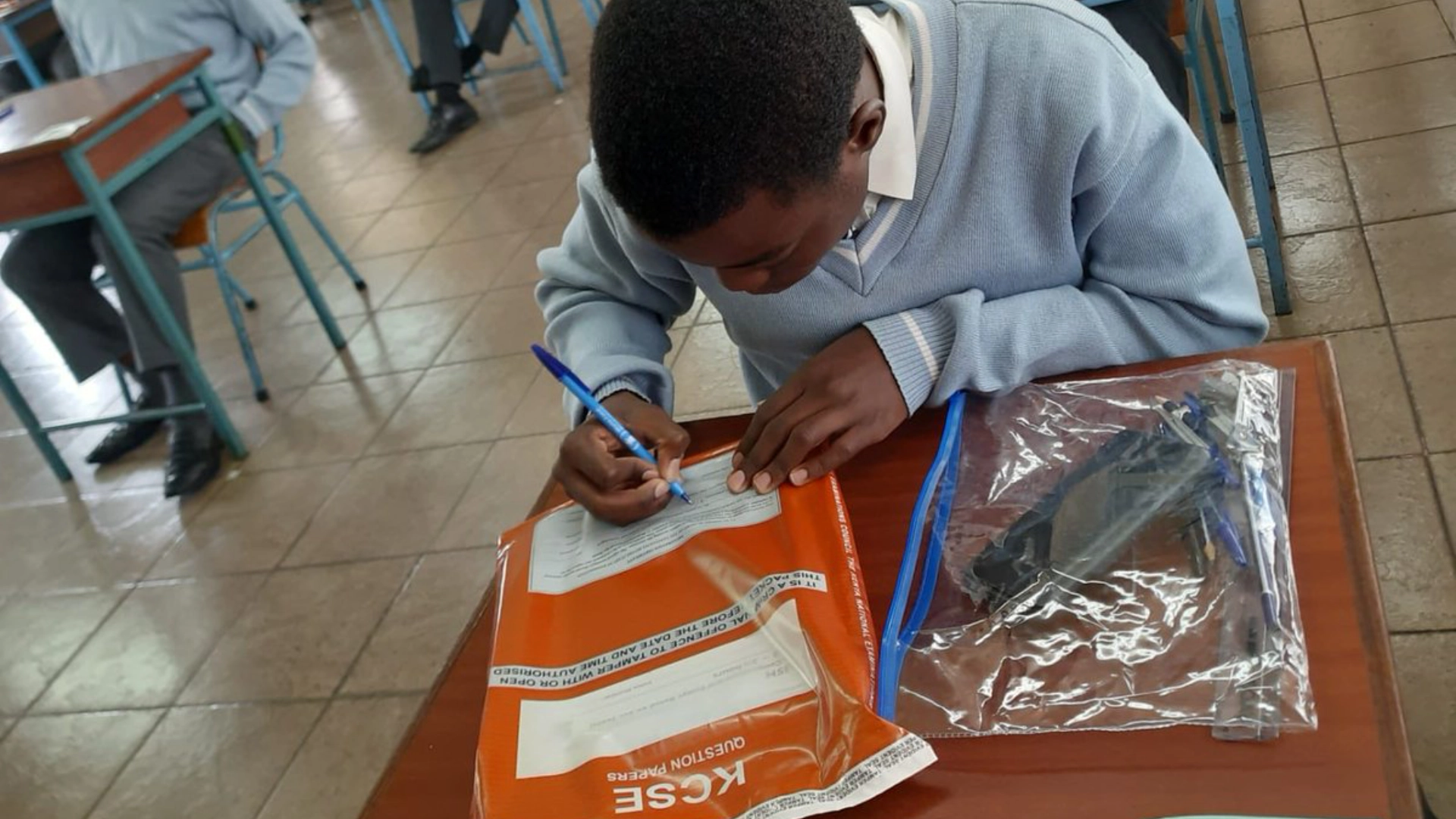
The Ministry of Education has put out its ambition to end paper-based national examinations, and the case for doing so makes sense on paper (no pun intended).
KNEC spends roughly KES 12.5 billion annually running exams, faces a KES 4.82 billion shortfall in the next financial year, and has for years been printing examination booklets abroad at costs Treasury Cabinet Secretary John Mbadi has publicly questioned.
The argument for this move is to cut the printing, cut the logistics, and modernize the system.
Going paperless will not simply be handing students a laptop. It requires a full restructuring of how national examinations are designed, delivered, secured, and marked, covering computer-based testing infrastructure across thousands of schools, encrypted offline-capable exam delivery, electronic marking systems, biometric candidate verification, and real-time analytics pipelines.
KNEC Chief Executive David Njengere points to the teacher training colleges’ rollout as proof of concept. What began as a 45-candidate pilot in 2021 has now reached over 50,000 candidates across more than 100 institutions as of 2025.
That is a legitimate foundation, but it is not a blueprint for rolling out to hundreds of thousands of Form Four and Grade 12 candidates nationally.
Kenya’s digital infrastructure is uneven, and that unevenness is the central problem. National and private schools are relatively prepared.
County and sub-county schools are not, with some rural institutions still lacking stable electricity or adequate ICT labs. Connectivity, often raised as the primary barrier, is actually manageable.
Global computer-based testing systems routinely use encrypted offline exam packets downloaded beforehand and uploaded after completion.
The harder challenges are devices, power reliability, and technical capacity at the school level, all of which require substantial procurement and deployment at a moment when KNEC cannot fully fund its existing paper-based system.
On security, exam leakage has repeatedly damaged KNEC’s credibility, and a properly implemented digital system, with encrypted delivery, biometric candidate verification, and comprehensive audit trails, is significantly harder to compromise than printing millions of papers and transporting them under armed escort through multiple hands.
However, digital exams also create new risks, including device tampering and AI-assisted cheating. The bigger question is whether Kenya can implement the system properly before those weaknesses are exposed.
The most serious risk, though, is not technical failure; it is that the transition creates a new tier of disadvantage. If urban and national schools get reliable devices, trained invigilators, and backup power while rural schools receive an underfunded version of the same system, assessment outcomes will reflect access inequality rather than student ability.
The CBC rollout has already drawn criticism on those grounds, and a digital exams transition that repeats the pattern would compound it at the highest-stakes point in a learner’s school career.
KNEC is targeting digital assessments in senior schools beginning in 2027, with the KNEAC Bill, 2025, proposing AI-powered scoring and real-time assessments as future capabilities.
Both are achievable in the long run, but the teacher colleges’ pilot succeeded partly because it was small, controlled, and institutional.
A national rollout is exponentially more complex, and whether the necessary infrastructure, retraining, and cybersecurity frameworks can realistically be in place within two years remains an open question.
The financial case for going paperless is real, and Kenya is moving in the right direction. Kenya has strong mobile penetration, expanding fiber infrastructure, and demonstrated capacity to run digital assessments at scale. The transition will save money, but not immediately.
The initial phase will cost more than the current system before efficiencies emerge over five to ten years. Done properly, Kenya could build one of Africa’s most capable digital assessment systems.
Done hastily, with infrastructure gaps glossed over, it risks producing an exam system that works well for learners who already have advantages and fails the ones who need it most. The announcement is the easy part.