





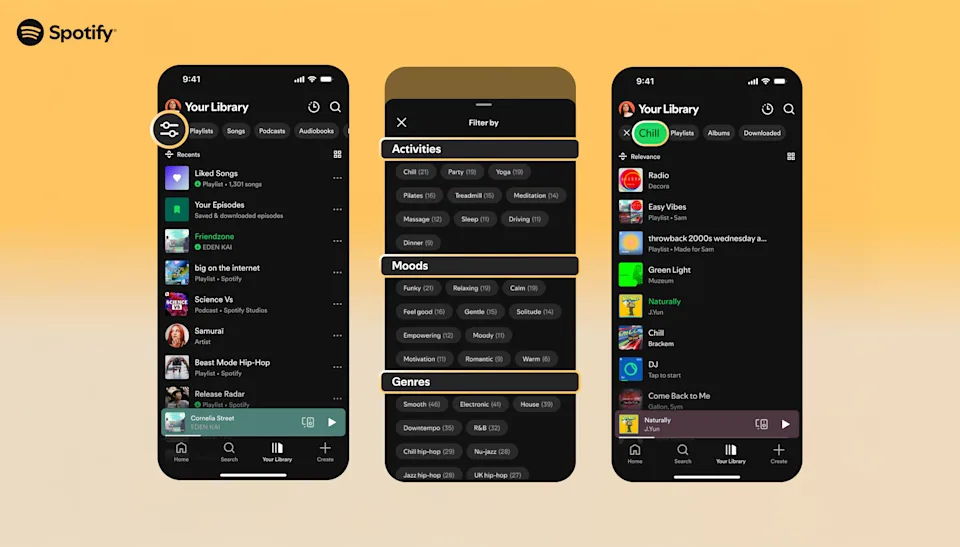
Music streaming app Spotify has introduced a new feature dubbed Smart Filters, designed to give users more ways to personalise what they hear.
The feature allows users to filter their library by specific activities, moods or genres. These filters can also be used to find playlists, podcasts, and audiobooks, and even launch a new listening session on the AI DJ.
The smart filters feature has initially rolled out to Spotify Premium subscribers on mobile and tablets in select markets like the U.S., U.K., Australia, Canada, Ireland, New Zealand and South Africa. The rollout is expected to move further to other markets over the next few weeks.
To enable the feature, all you have to do is:
- Tap the filter icon in the top left of Your Library.
- The Smart Filters menu will appear with options tailored to your saved content, organised by activity, mood, or genre.
- Select a filter, and your Library will update to match your choice.
This new feature comes as part of Spotify’s strategy to improve personalization through new tools and features that have been rolling out in the last few months. These tools are obviously the company’s focus on setting itself apart from its rivals in the music streaming business.
One of the best examples was the introduction of tools designed to create personalized playlists using AI prompts, back in April. The following month saw Spotify add new playlist management tools and a way for users to create their own custom cover art.
AI DJ has also been made more interactive through voice commands if you wish to customize your music selection. Discover Weekly, Spotify’s flagship personalized playlist, was also revamped to accommodate new customization tools.
The downside to all these new controls and features is that the interface now feels too crowded, which many users have complained about.
This is especially true as the company appears to be shifting toward making the app more of a social platform, adding options like messaging, podcast comments, and Stories.
Despite the complaints, Spotify still seems to be growing as the company reported a user base of 696 million in the last quarter, translating to an 11% year-on-year increase from the same period last year.