




Apple Music just got more expensive, and it’s happening everywhere at once.
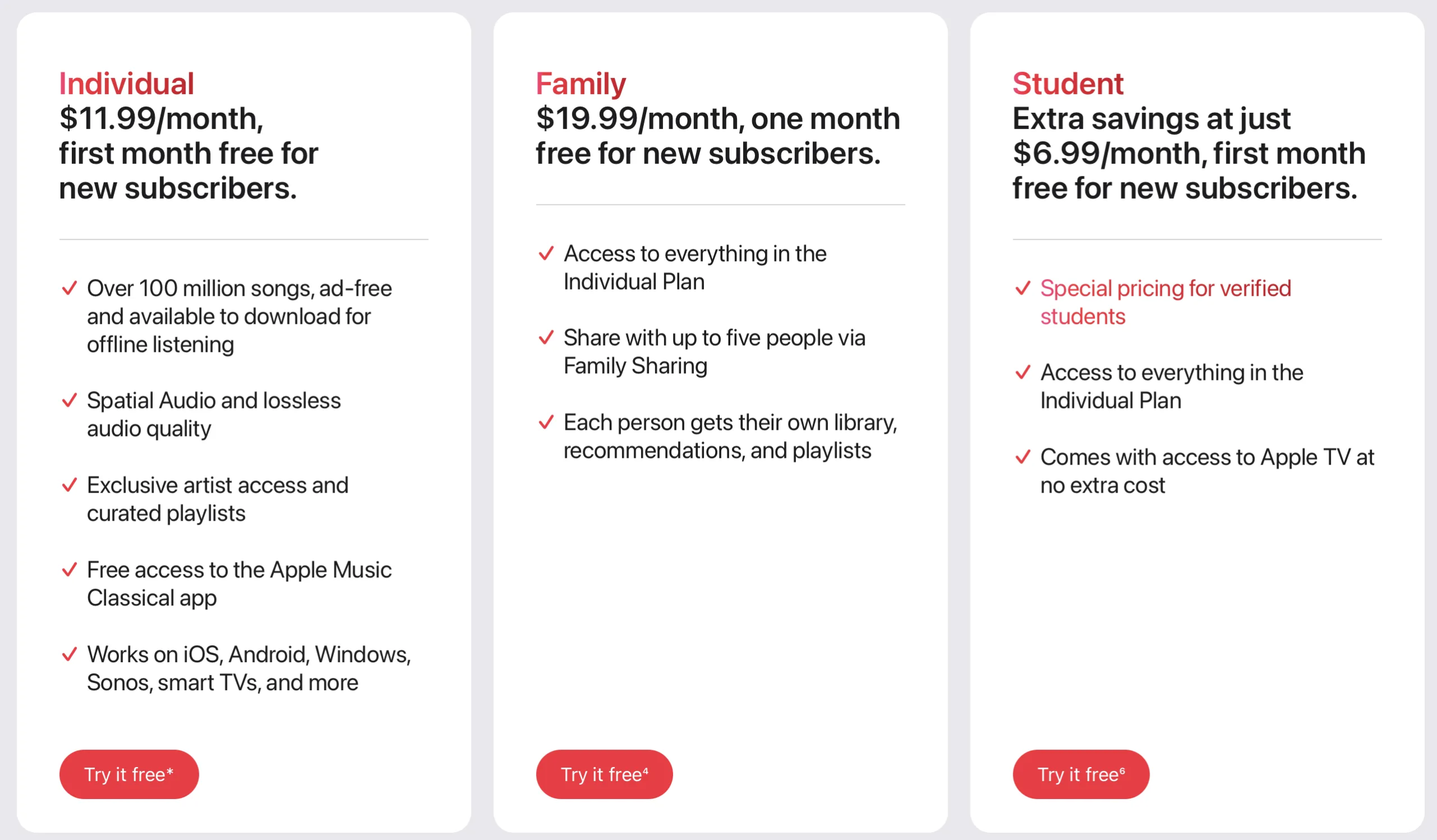
Starting today, the individual plan in the US goes from $10.99 to $11.99 a month. Family plans jump from $16.99 to $19.99, and the student plan moves from $5.99 to $6.99. The same pattern is showing up in the UK and across Europe, and it sounds like more countries will follow.
This is the first time Apple has touched Music pricing since October 2022, when the individual plan went from $9.99 to $10.99. Before that, the price had sat untouched since the service launched back in 2015.
Apple’s explanation is short: rising licensing costs. That’s the same reason the company gave in 2022, when it said the change would mean more money for artists and songwriters.
It’s worth noting this isn’t a regional adjustment tied to currency swings. The increase is landing worldwide at the same time.
Apple isn’t just raising Music prices either. Apple One, the bundle that combines Music, TV, Arcade, and iCloud storage, is going up too, though not evenly across the board.
The basic individual tier stays at $19.95 a month, but the family tier rises by $2 to $27.95, and the top Premier tier also climbs $2, landing at $39.95. Premier includes TV, Music family plan, Arcade, 2TB of iCloud storage, Fitness+, and News+.
None of this is happening in a vacuum. Spotify raised its US prices earlier this year, pushing its individual plan to $12.99 and its family plan to $21.99. That means Apple Music, even after this hike, is still sitting a dollar below Spotify’s individual price.
Spotify has also been raising prices in dozens of other markets over the past year or so, including the UK, Switzerland, and Australia, and its executives have made clear that this isn’t a one-time move.
They’re treating regular price increases as part of the plan going forward, and they’ve said retention has stayed strong even after previous hikes.
Behind all of this is pressure from record labels, who have argued for a while now that music streaming is priced too low, especially next to video services like Netflix.
That comparison came up again last year when Apple raised TV+ pricing while leaving Music untouched, widening the gap between what people pay for video versus music streaming.
The bigger picture here is the global music streaming market is closing in on a billion subscribers, with Spotify still the largest player by far.
As that market matures, both major streaming services seem to be settling into a rhythm of periodic price increases rather than treating their original launch prices as permanent.
READ: Spotify v. Apple Music v. YouTube Music: Which Is Worth Your Money in 2025?
If you’re an existing subscriber, you won’t see the new price immediately. Apple typically waits until your next billing cycle and sends a notice first. New subscribers, though, pay the higher rate starting now.