





Mawingu, East Africa’s largest rural internet service provider, announced today it has secured $20 million in funding from Pembani Remgro Infrastructure Fund II (PRIF II).
The investment is a big step in the company’s plan to bring internet access to 1 million people across Africa by 2028. The Kenyan ISP has built its business on a simple premise: connecting the communities that larger telecoms ignore.
Starting from Nanyuki at the foothills of Mount Kenya in 2012, Mawingu now operates across 31 counties in Kenya and recently expanded into Tanzania through the acquisition of Habari in November of last year.
The Market Opportunity
The numbers reveal why Mawingu sees massive potential. In Kenya, there are 12 million homes, but only 2.1 million are connected to the internet, according to the latest Communications Authority reports.
Tanzania’s situation is even more stark, as there are 14 million homes with just 300,000 connected.
CEO Farouk Ramji explained that Mawingu isn’t trying to connect everyone. The company focuses on households with combined monthly incomes around $300 (roughly KES 40,000), believing they’ll spend 6 to 7% of that on broadband.
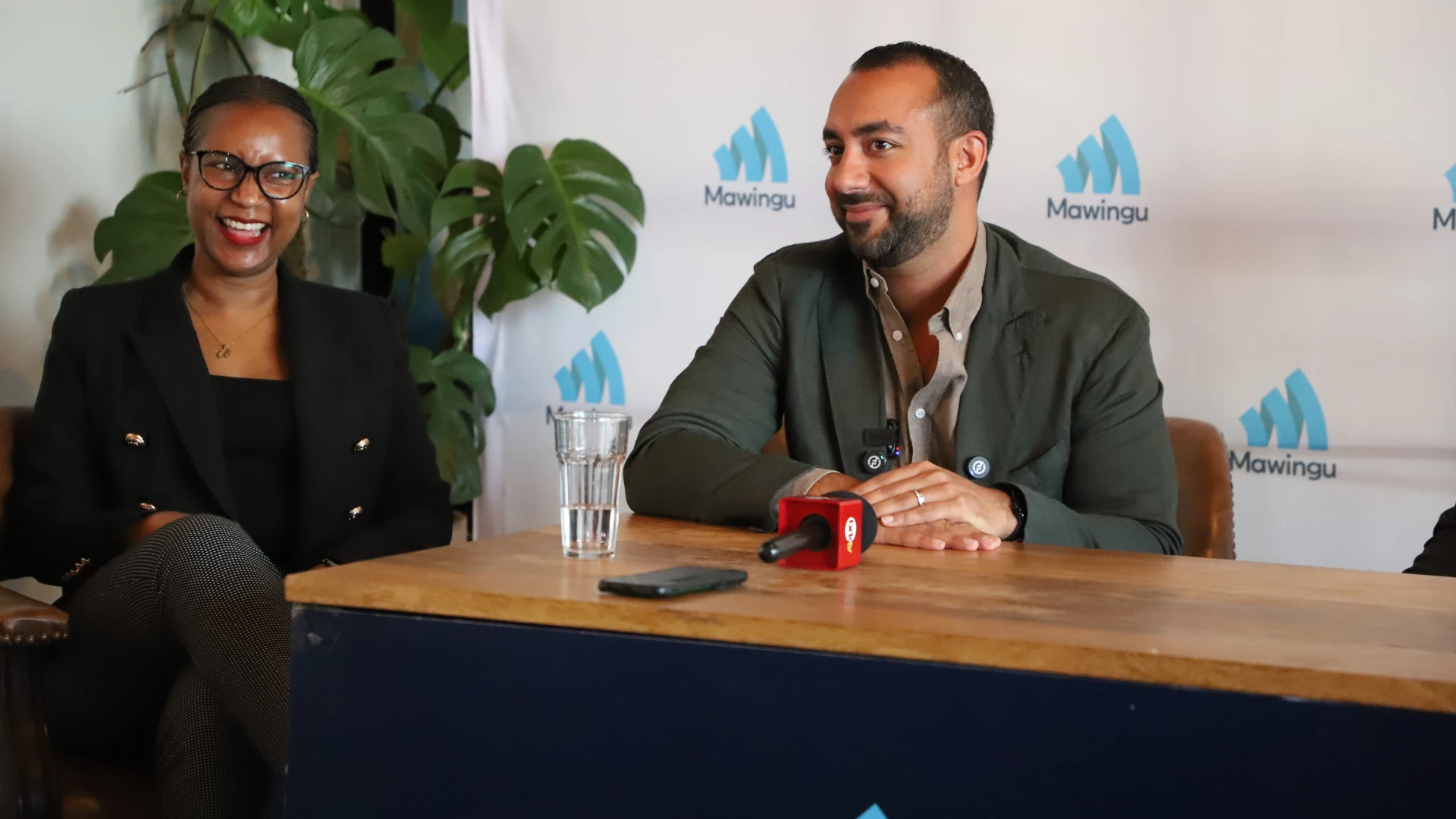
This targeting narrows the addressable market to about half a million homes in Kenya’s rural and peri-urban areas, with similar numbers in Tanzania.
Customers in these areas are hungry for data. Rural and peri-urban users across both countries consume an average of 300 GB per month, a usage level that would be prohibitively expensive on mobile networks at roughly KES 100-130 per GB.
Why Tanzania Has Worked for Mawingu
Expanding into Tanzania through Habari provided crucial lessons for the company. The acquisition made logistical sense since Arusha, where Habari operates, sits just 3-4 hours from Nairobi.
Both companies shared a common shareholder and similar philosophies about serving rural markets, though Habari focused on business customers while Mawingu excelled at connecting homes.
Now 11 months post-acquisition, Mawingu has secured a national license in Tanzania, added over 3,000 home users, and extended coverage to nine regions, including Arusha, Dodoma, Iringa, Manyara, Mara, Kilimanjaro, Mwanza, Morogoro, and Shinyanga.
Ramji acknowledged the learning curve around systems integration, cultural differences, and market-specific approaches. Tanzanians behave differently than Kenyans, and future markets will bring their own challenges.
Mawingu’s Expansion Strategy
Mawingu follows a disciplined “buy-and-build” approach, acquiring successful local ISPs and integrating them into its broader network. This strategy allows rapid scaling while leveraging existing infrastructure and local knowledge.
READ: Mawingu Raises KES 1.12 Billion to Expand Fixed Internet Access to 25 Kenya Counties
The company deliberately avoids both mobile internet and major urban centers. Ramji was emphatic that Mawingu will never enter the mobile market, noting it would require $200 million plus in investment.
Similarly, Nairobi and Mombasa are off the table. The urban markets have over 150 ISPs competing, while rural and peri-urban areas remain underserved.
Ramji confirmed the company is in advanced stages of exploring new countries, which explains the shift in messaging from impacting “1 million East Africans” to “1 million Africans.”
However, the approach will depend on market conditions and whether Mawingu enters through acquisition or builds from scratch.

Addressing the Technical Challenges
When Techweez pressed about declining streaming performance reported by French internet monitoring company nPerf, Ramji explained that the new funding will address network densification.
Mawingu’s initial strategy involved entering new towns with wireless technology to test markets and adoption rates. Now the company is deploying fiber networks.
“You will now notice that in Isiolo we’ve got over 30 kilometers of fiber. Garissa has over 780 kilometers of fiber. Wajir has most recently been done. We’ve actually got a list of the next six, seven towns that are ready to go with fiber. So, what we are doing is starting to build the quality of network to enhance the speed. I mean, at the end of the day, fiber is the epitome of technologies that everyone wants to work towards,” Ramji said to Techweez.
READ: Kenya Crosses 2 Million Fiber and Wireless Internet Connections
Techweez also brought attention to the installation deposit question, which could limit access and growth. Unlike competitors such as Safaricom and Zuku, who’ve reduced installation costs to just the first month’s payment, Mawingu still charges refundable deposits in many regions.
Ramji acknowledged this could limit growth but emphasized the company’s differentiator isn’t installation cost but rather the quality of service.
He explained that two years ago, the deposit structure was different, and it continues evolving. Some regions run promotions, and the company stays nimble based on competition and market conditions.
“If you asked me the same question two years ago, our deposit structure was very different than what it is today.”
What sets Mawingu apart is having local technicians in all 31 counties, an in-house 24/7 Network Operations Center, and an in-house Customer Service Center. Customers are handled by Mawingu staff on the ground, not outsourced support.
“We have to stay nimble in the market. I can’t confirm today what will happen, but we make sure that it’s clear that our differentiator is not the cost of installation. Our differentiator is the quality of the product that we are delivering on the ground,” Ramji stated.
The Social Impact of Mawingu
Mawingu registered a not-for-profit foundation in 2023 that operates alongside the commercial business. The foundation has connected over 300 institutes, including schools, learning hubs, ICT centers, and other community organizations, at cost.
By heavily discounting internet to these institutions, Mawingu makes quality access affordable while maintaining commercial viability.
Ramji emphasized that these institutes have become some of the best-paying customers on the network. The model allows exponential community impact when homes and local schools both connect through Mawingu.
He noted it’s rare for a company to be both profitable and impactful simultaneously, and that dual mission keeps him motivated.

Understanding the Customer
Operating in rural and peri-urban areas requires a different sales approach. Many customers are getting internet access for the first time or have been underserved by mobile networks.
While Kenya and Tanzania both have extensive 3G and 4G coverage, the cost becomes prohibitive for meaningful data usage.
The education component is also significant. As Ramji told Techweez, one of the most frequent questions to Mawingu’s call center is simply “How do I change my password?”
Rather than pitching speed and price, staff focus on understanding what customers actually want internet for: How many devices? Working from home? Entertainment only? This allows Mawingu to recommend appropriate packages.
The company localizes content and communication for the communities it serves, recognizing that adoption takes time as people learn what’s possible with reliable home internet.
What Pembani Remgro Sees
Ridwaan Tayob, leading the transaction for Pembani Remgro Infrastructure Fund II, pointed to Mawingu’s track record of disciplined growth and innovation in underserved markets.
The fund focuses on inclusive, long-term infrastructure development across digital connectivity, energy, transport, and logistics sectors in Africa.
This investment also indicates broader economic realities. Fixed broadband penetration in Sub-Saharan Africa remains around 12% of households, despite World Bank research showing that a 10% increase in broadband penetration can raise GDP growth by 1.38% in developing countries.
With proven models in Kenya and Tanzania, Mawingu is positioning itself as the vehicle to close that gap across the continent. The question now is which countries come next and whether the rural-first approach will translate beyond East Africa.