




When Twitter (now X) introduced a new transparency feature showing where accounts were created, the internet did what it does best: started digging through profiles looking for surprises. And it found plenty.
The feature launched as part of X’s effort to help users identify potentially inauthentic accounts. Head of product Nikita Bier announced the rollout on Saturday, explaining that an “About This Account” page would now display the country or region where users created their accounts, along with other details like how many times they’d changed their username.
“This is an important first step to securing the integrity of the global town square,” Bier wrote, adding that X planned to provide more ways for users to verify content authenticity.
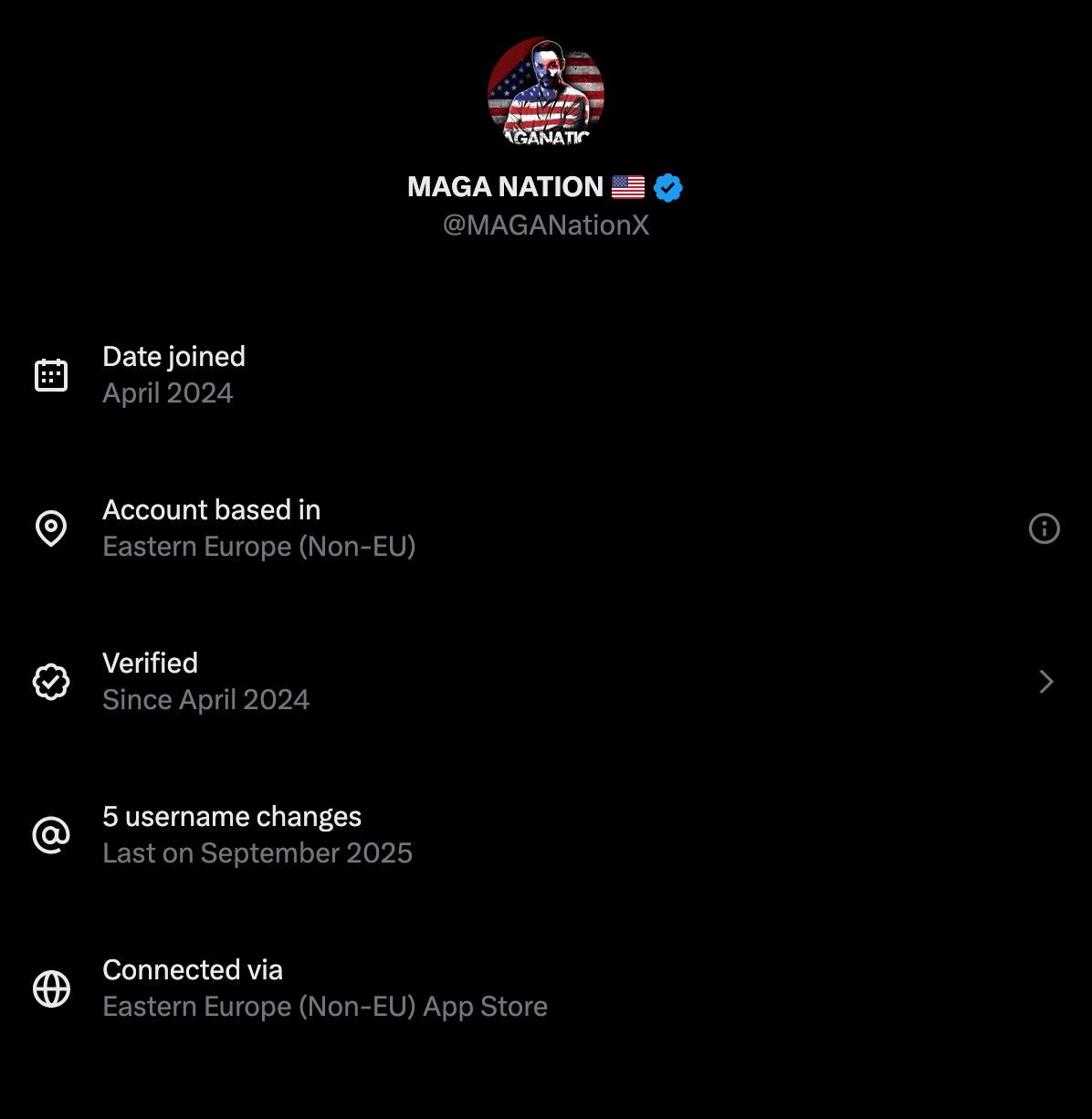
The results were immediately messy, as users quickly discovered that several prominent accounts pushing American political content appeared to be based nowhere near the US.
MAGA NATION, an account with 400k followers that describes itself as “America First,” showed up as being based in a non-EU Eastern European country.
Another account called America First, which posts content like asking for thumbs up from Trump-loving Christians, appeared to originate from Bangladesh despite having nearly 70k followers.
As expected, the backlash came from multiple directions. Some users worried about privacy and safety, especially for people in countries that restrict free speech.
Others pointed out technical problems, like how accounts created through VPNs would show misleading location data, and Bier himself admitted the information “was not 100 percent,” especially for older accounts.
By Saturday evening, X had pulled back some of the location data. Bier said the company planned to bring it back by Tuesday. Five hours after his initial announcement, he posted a simple update: “I need a drink.”
The feature wasn’t designed to be definitive proof of anything. X framed it as one signal among many that users could consider when evaluating accounts. The platform even notifies users when it detects proxy usage.
However, the quick pivot suggests X underestimated how controversial exposing account origins would be, both for users concerned about their own safety and for those suddenly facing questions about why their pro-American content was coming from halfway around the world.