




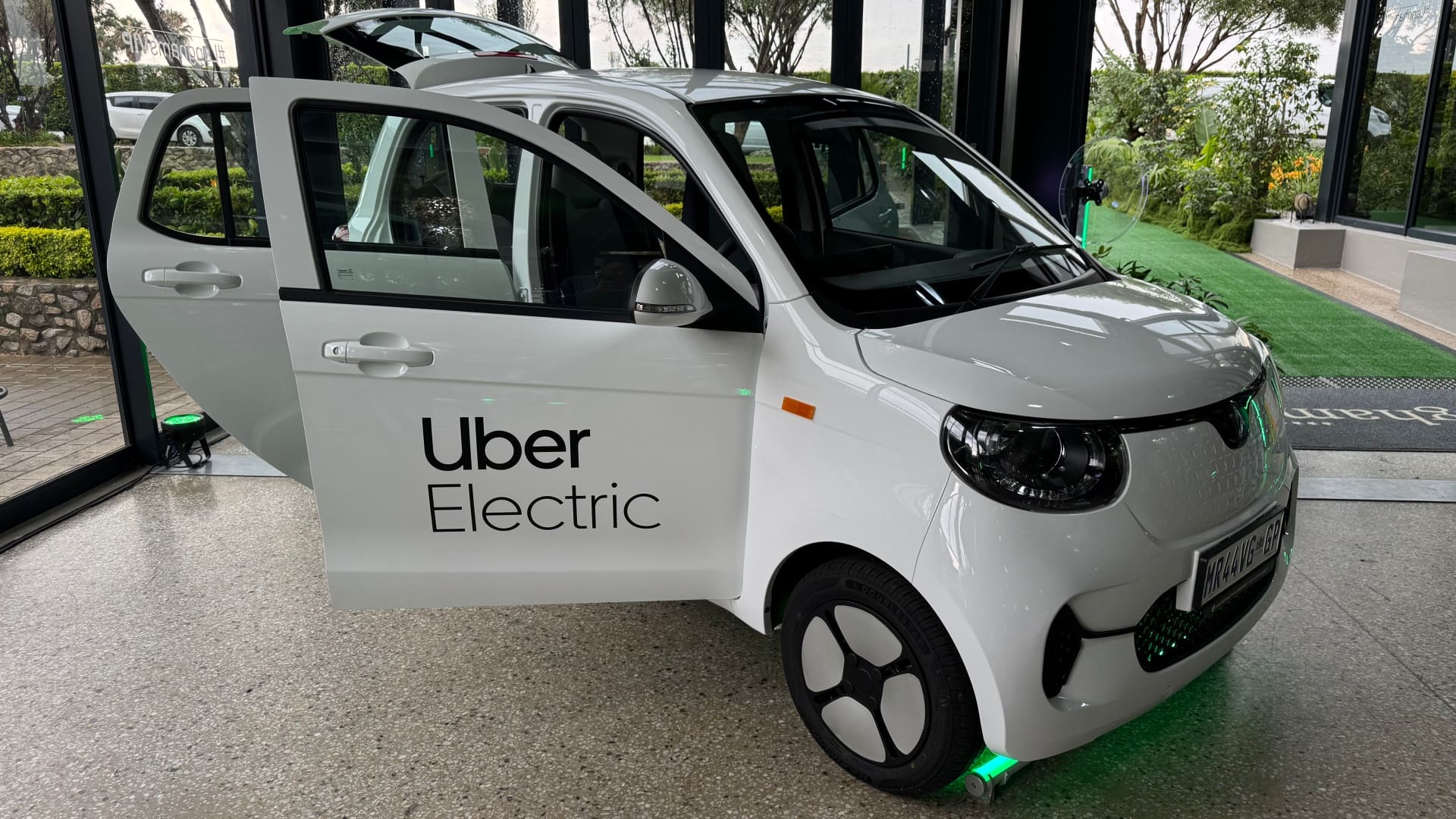
Uber has launched its first electric cars in South Africa, starting in Johannesburg. This is part of Uber’s plan to use only zero-emission rides and deliveries worldwide by 2040.
The rollout begins with about 70 electric cars and should grow to around 350 by the end of January. The cars are small Henrey Minicar 4-seaters, brought in from China by Valternative Energy. Valternative is also working with Uber on electric motorbikes.
A major change in this rollout is how drivers will use the cars. Deepesh Thomas, Uber’s General Manager for Sub-Saharan Africa, explained that drivers no longer need to buy their own vehicles. Instead, they can rent one and use Valternative’s charging network.
Valternative handles the vehicles and works with the drivers, which means drivers can start working without taking on the heavy cost of buying or financing an electric car.
Thomas also said this setup helps drivers earn more consistently. The cars are fully charged, drivers have reliable access to charging points, and they no longer have to worry about rising fuel prices.
This gives them more stable earnings and lets them focus on completing trips. As more of these vehicles are used, the overall cost of operating them makes more financial sense compared to fuel-powered cars.
Valternative’s CEO, Mohamed Jeeva, spoke about the financial challenges many drivers face. He said it was difficult at first for drivers to understand that once they get into the vehicle, there are no extra costs. Many last-mile drivers live on very tight budgets.
READ: Survey Finds 94% of Kenyans View Ride-Hailing as Safer Than Other Transport
They often start the day with a small amount of money for fuel, and once that money is gone, they stop working. Valternative has removed that problem.
Now, when Uber pays drivers each Monday, Valternative also pays them. Drivers receive their full earnings without needing to spend anything on fuel during the week.
This launch is important for South Africa as it supports Uber’s clean energy goals and reduces the cost of running a car for drivers. It also shows that electric cars can work even in countries where charging infrastructure is still growing.
This naturally leads to the question: could Kenya be next? The chances look promising. Kenya already has a growing electric mobility sector, especially when it comes to motorbikes.
The country relies heavily on renewable energy, which makes electric transport both cleaner and more affordable. It also has companies developing battery-swap stations and expanding electric motorcycle fleets.
However, Kenya would still need more charging stations, stronger policies for electric cars, and rental models that drivers can afford. Kenyan drivers also face tight budgets, similar to South African drivers. This means a model that removes fuel costs and gives stable weekly earnings could work well in Nairobi.
Uber also has experience in Kenya. The company has already introduced electric motorbikes in the country, which shows it is open to expanding electric transport there. Moving from bikes to cars would be a natural next step once the conditions are right.