





For the first time in around fourteen years, Apple is on track to overtake Samsung in global smartphone shipments. This finding comes from new estimates shared by Counterpoint Research.
According to the report, Apple is expected to ship about 243 million iPhones by the end of year. Samsung is projected to ship roughly 235 million units.
The difference may look small, but it is enough to push Apple to the top spot after more than a decade of Samsung leading the global rankings. The last time Apple held this position was back in 2011, which makes this the end of a very long run of Samsung dominance.
The expected rise for Apple is fueled strongly by the early success of the iPhone 17 series. Launched in September, the new devices have reportedly performed very well in markets around the world. Analysts believe the current upgrade cycle is also working in Apple’s favor.
Many people who bought phones during the pandemic years are now ready to replace them. Since Apple’s strength lies in the premium end of the market, the company is benefiting from consumers who want reliable, long-lasting devices with strong software support.
Samsung, on the other hand, is still growing, but Apple is simply growing faster. Samsung’s wide product range has always been its advantage, stretching from high-end flagships to affordable entry-level devices.
Even so, this year’s projections show the gap tightening in a way that heavily favors Apple. The fact that the margin between them is less than 1% shows how intense the competition is.
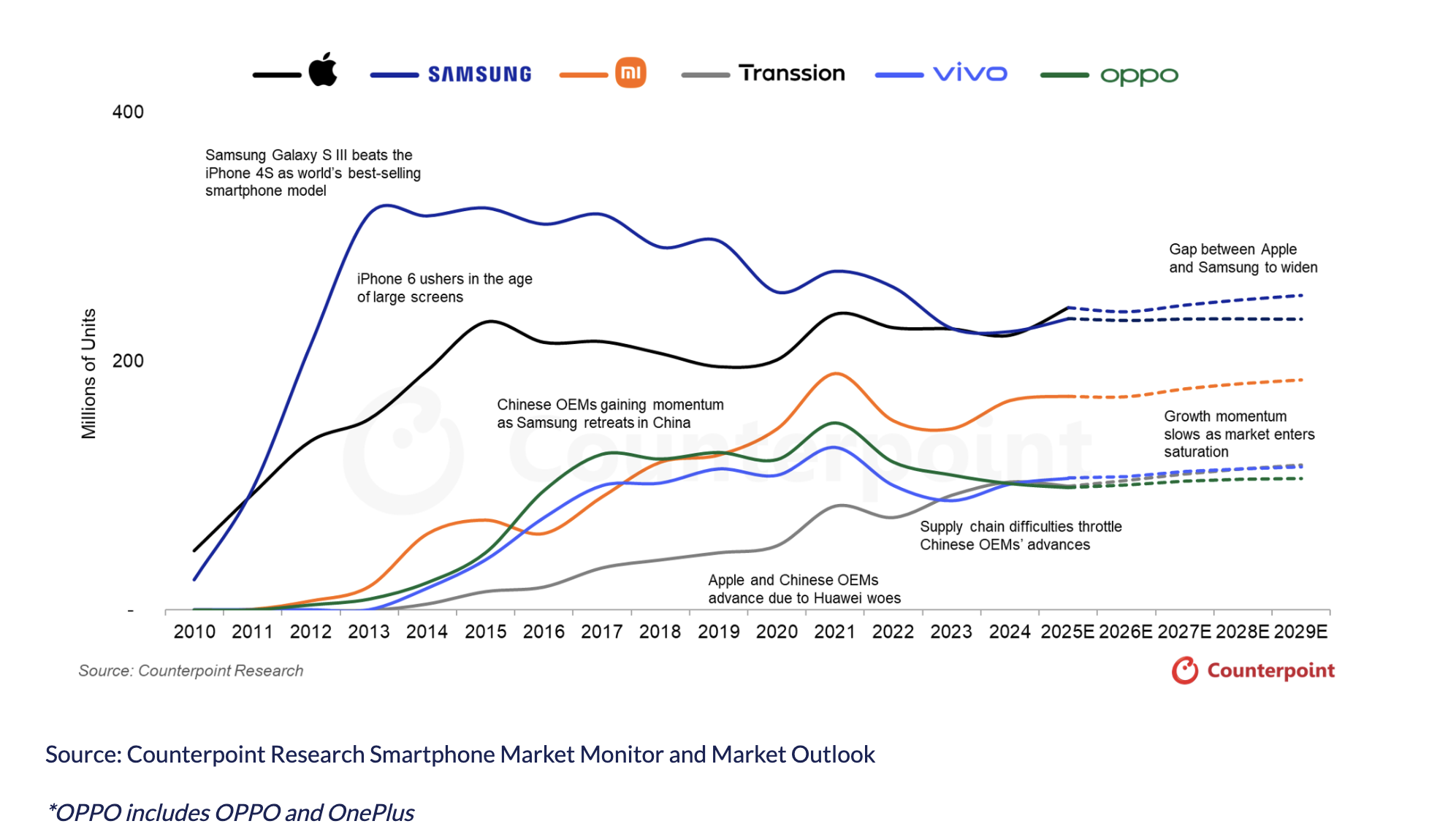
Counterpoint points out that Samsung would still perform strongly overall, but the company’s pace of growth is not enough to keep its lead.
Apple’s performance in the premium category is beginning to outweigh Samsung’s strength across different price tiers. This makes 2025 one of the most interesting years in the global smartphone market in recent memory.
For consumers, the shift could push manufacturers to invest more in software, build quality and long-term performance. Apple’s rise may force other brands to rethink their strategies, especially in regions where affordability plays a key role.
READ: Apple Pulls Plug on iPhone Air 2 After Disappointing Sales
In Africa, for example, Apple’s growth will not necessarily translate to a surge in iPhone ownership, but it will likely influence how other brands compete. Companies may become more aggressive in offering better mid-range devices with features borrowed from premium models.
The report also insists that these shipment figures are based on analyst projections. Apple and Samsung do not publish full yearly shipment numbers, so the final outcome may still change depending on global economic conditions, production challenges or shifts in consumer behavior.
Still, the current indicators point to a milestone year where Apple could reclaim the crown it last held more than a decade ago.