




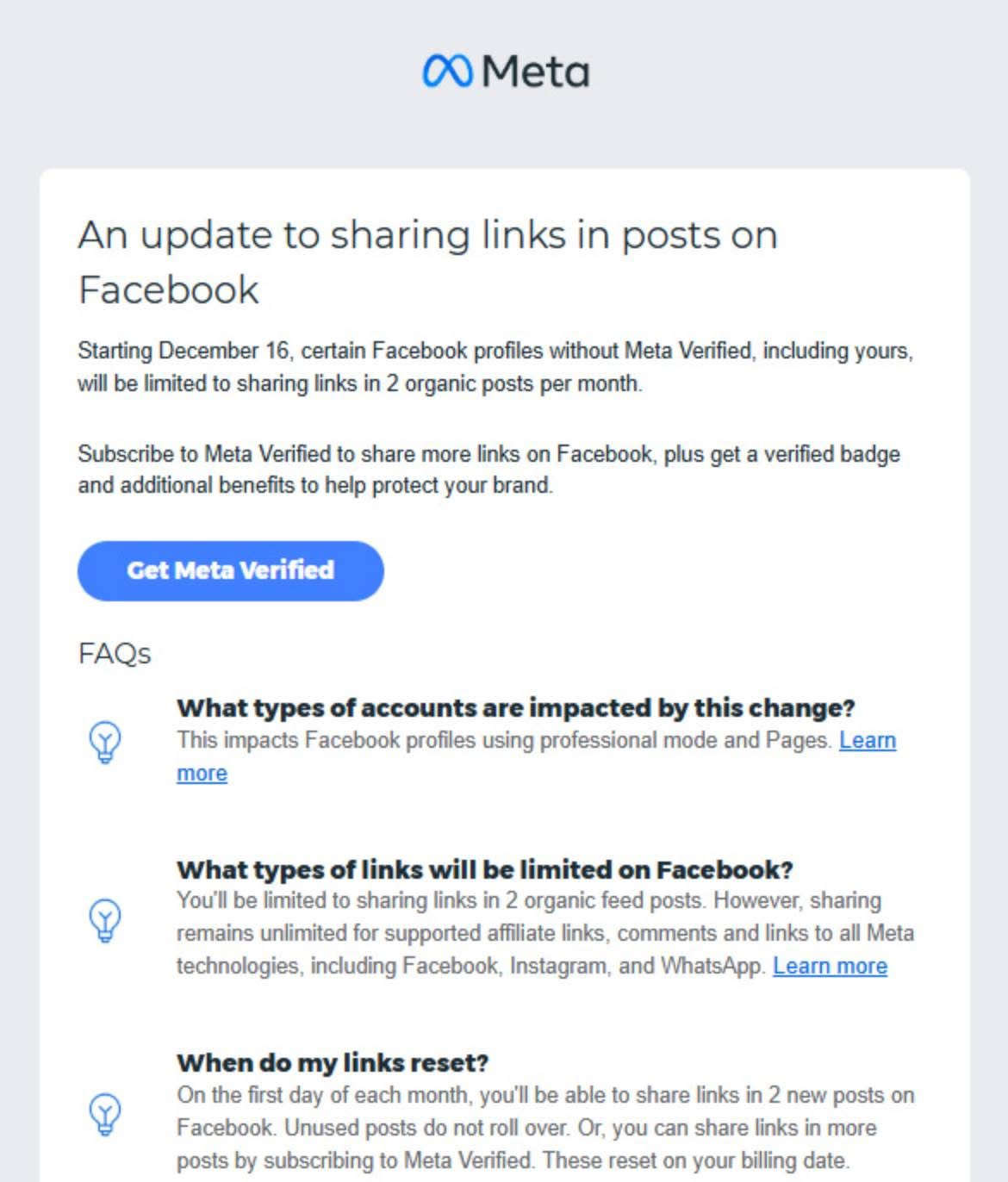
Facebook is testing a new restriction that limits how many links certain users can post each month unless they pay for Meta Verified, the company’s $14.99 (~ KES 1950) monthly subscription.
The test targets creators using Facebook’s professional mode and businesses running Pages, not regular personal profiles. Under the restriction, these users can only share two links per month in organic posts. If you want to share more, you’ll need to subscribe.
Meta frames this as an experiment to see if unlimited link sharing adds value for paying subscribers. The company just released data showing that 98% of feed views in the US come from posts without links. Only 2% of views include external links, mostly from Pages people already follow.
That makes links easy to gate. If most users aren’t clicking them anyway, why not turn them into a premium feature?
For creators who rely on Facebook to drive traffic, such as affiliate marketers, small business owners, writers, and coaches, this changes everything.
Many of these people post multiple links per week to products, newsletters, or services. Cutting that down to two per month essentially breaks their business model on the platform.
Links in comments will remain unlimited, as will links to Instagram, WhatsApp, and other Meta properties. However, the core function – posting a link to send people somewhere else on the internet – is now being treated as a premium privilege.
Social media strategist Matt Navarra, who first spotted the test, called it a clear signal that Meta wants to monetize content distribution itself.
He warned that businesses overly dependent on any single platform are taking serious risks when basic features can suddenly become paid services.
This isn’t unique to Meta. X removed headlines from news links in 2023, making outbound content less appealing. Platforms across the board want users scrolling inside their apps, not leaving them. Gating links is one way to enforce that.
For anyone who built their audience or business on Facebook’s free distribution, that’s a fundamental shift and a reason to reconsider where to invest their time and content.