





Just two days before Uganda’s general election on January 15, the government pulled the plug on public internet access. The Uganda Communications Commission ordered the shutdown on January 13 at 6 pm and will remain in force until further notice.
Authorities cited concerns over misinformation, electoral fraud, violence and national security as justification for the blackout.
Critics, including the main opposition candidate Bobi Wine (real name: Robert Kyagulanyi), argue that the shutdown undermines democratic processes.
He believes that cutting off the internet keeps voters in the dark, blocks independent poll monitoring, and pretty much guts transparency during a critical moment.
Opposition supporters describe the shutdown as evidence that the government fears free expression and political competition. One sentiment widely shared on social feeds calls the outage “cowardice” and an attempt to “silence truth”.
READ: How Technology Could Shape Uganda Elections and Why History Matters
Some citizens, however, defend the shutdown as a security precaution, claiming that it might reduce the spread of inflammatory content and protect voter confidence, echoing the government’s official reasoning.
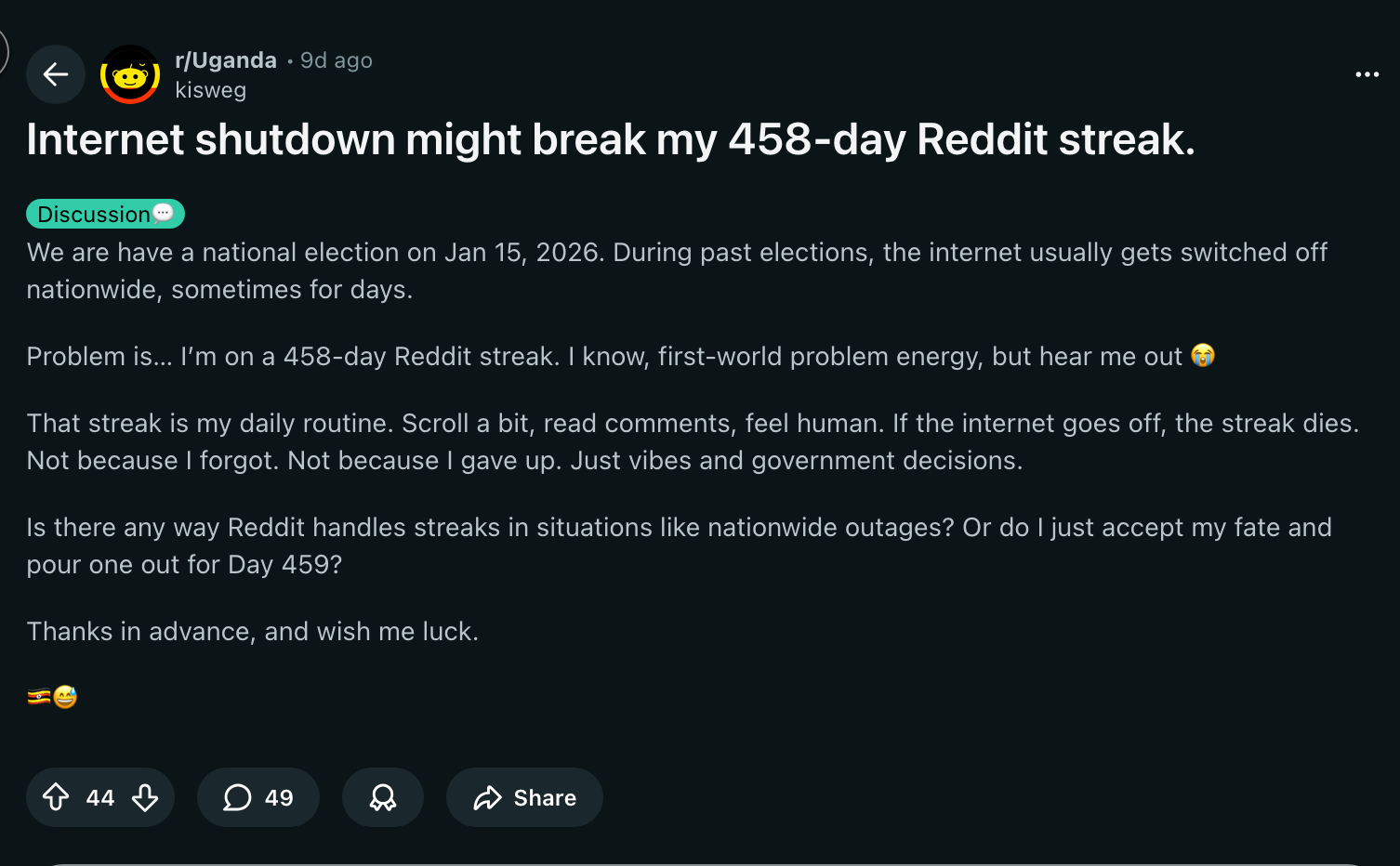
At the same time, a mix of humor and frustration has started to appear online. People in Uganda have been reacting to the internet outage and how it will interrupt their usual routines.
One Reddit user even joked about it in advance, saying they were already mourning the loss of their Reddit streak.
Bitchat Now Tops App Store Charts
As the shutdown took hold, BitChat, an offline messaging application based on Bluetooth connections, quickly topped the chart in Uganda’s app store, thanks in large part to an explosion in downloads.
As reported by RootData analytics, this usage surge mirrors the people’s intent to remain connected during the blackout.
Bobi Wine had urged his followers to download BitChat and other alternative means of communication before the shutdown occurred. He saw this move as a backup plan to help people stay connected in case regular networks were cut off.
Just days before the shutdown, the Government of Uganda publicly denied that an internet shutdown would occur, referring to rumours of such plans as “false, misleading, and intended to cause unnecessary fear.”
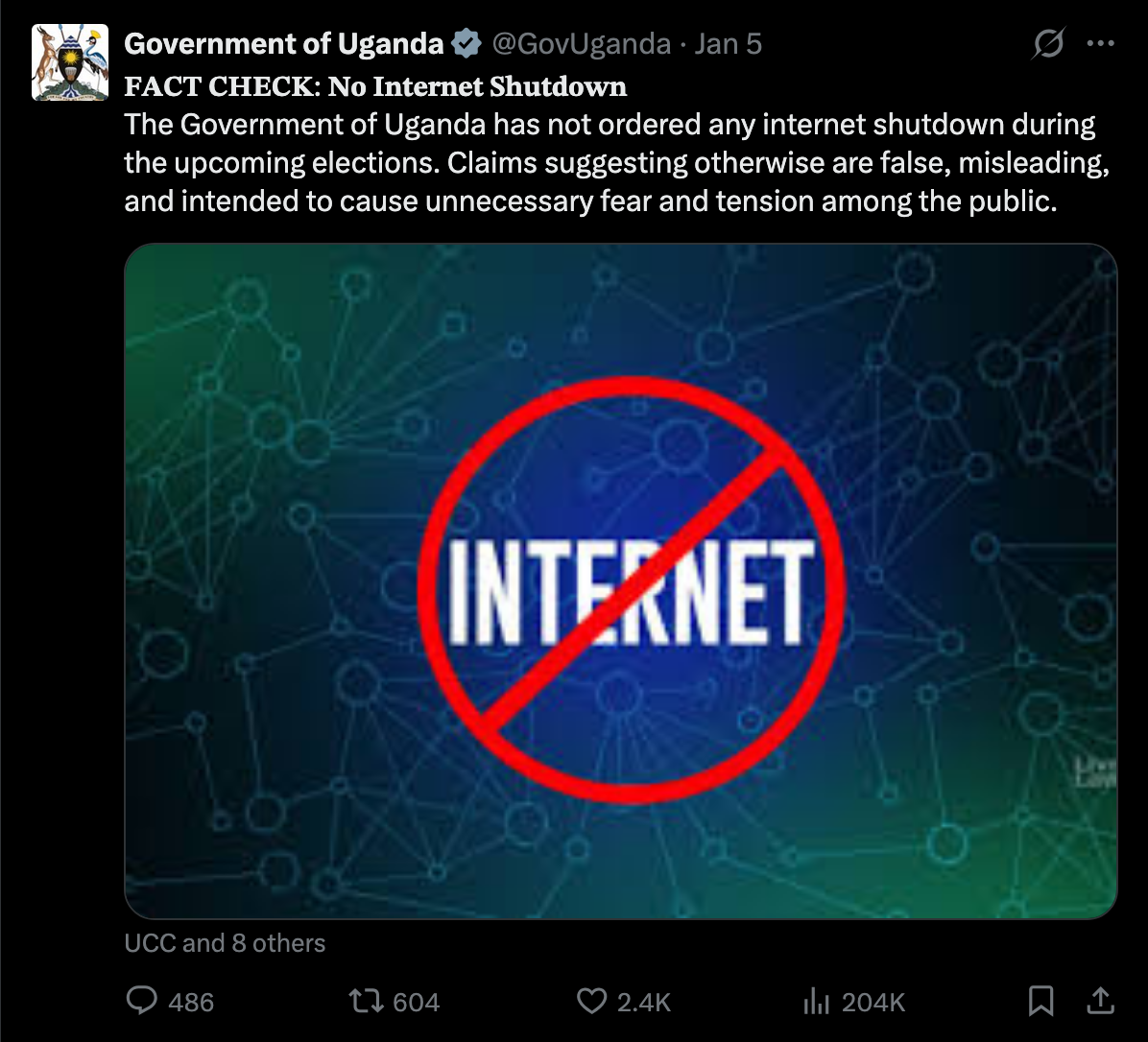
This contradiction has led many to believe that the internet blackout was planned all along, and that the authorities failed to address public concerns in time before enforcing it with little warning.
As a result, the situation has only deepened worries about the growing lack of trust between the government and its citizens.