




OpenAI just entered the translation game with the launch of ChatGPT Translate, a standalone, web-based translation tool that is already drawing direct comparisons to Google Translate.
The app appears ready to go head-to-head with Google’s long-reigning translation service.
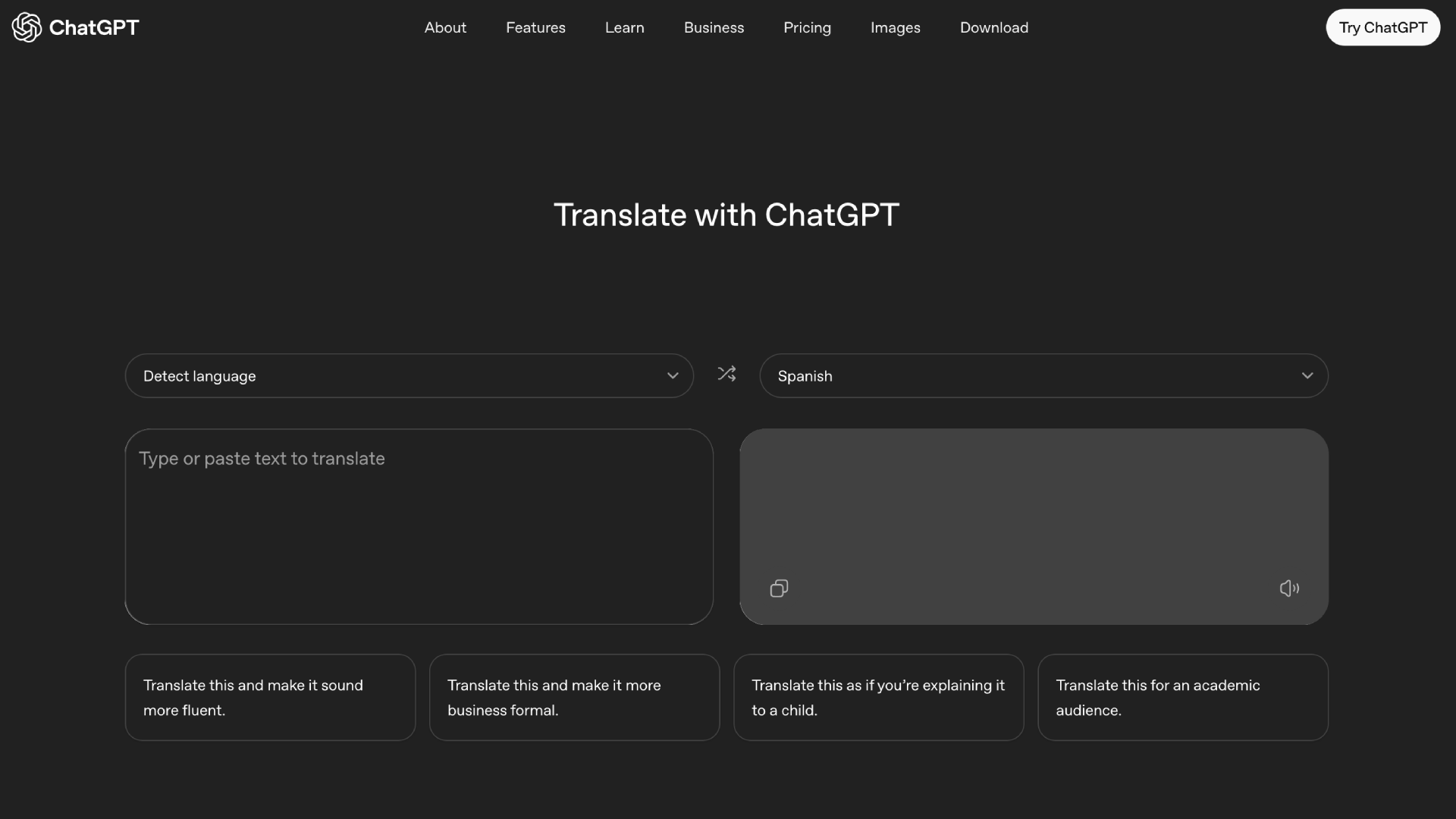
To most users ChatGPT Translate looks familiar with two text boxes side by side, automatic language detection, and quick translations in over 50 languages. If you’ve ever used Google Translate, you’ll know your way around.
However, unlike other translators out there that rely on the usual statistical or neural translation methods, OpenAI is betting that AI can actually take things further.
Like Google Translate, you can paste text into one panel and see the translation appear instantly in the other. On the mobile browser version, you can also speak, and your words will be translated in real time.
The interesting bit is after you get your translation, you can edit it directly in the interface with the help of AI prompts. Want it more formal? Need it simpler? Writing an email or a research paper? Just tell it, and the translation changes instantly.
READ: New ChatGPT Health Tool Wants Access to Your Medical Records
That’s the biggest thing ChatGPT Translate has going for it. OpenAI treats translation as a two-way, interactive process. You’re not just copying and pasting a block of text.
You can work with the translation, tweak the tone, and make it fit what you actually need. It’s a translation that feels more like a conversation.
Google Translate remains the most widely used translation tool globally, with a feature set that goes far beyond plain text. There are utilities for uploading documents and translating images from a camera, which is ideal for translating restaurant menus or road signs.
These are not features you can find in ChatGPT Translate, yet. However, OpenAI seems to be focusing on a different goal: context and nuance.
Common translation engines tend to prioritize speed and literal translation. For ChatGPT Translate however, the focus is on interpretation, particularly in long and complicated texts, giving you the capability to fine-tune the result.
You can think of it as the language version of Genius, but for understanding words and meaning.
READ: ChatGPT Introduces Real-Time Group Chats for Up to 20 People
Users who need translations for professional, creative, or collaborative work, where how something is said can matter as much as what is said will find a lot of use from ChatGPT Translate.
Right now it’s pretty basic, with no document uploads, no image translation, and no robust live conversation features. It’s not ready to replace Google Translate for every use, but it’s carving out a space for people who care about getting translations just right and want more control over the end result.