






There was a time, not that long ago, when Meta wanted everyone to believe the future of the internet meant strapping on a clunky VR headset and floating around as a legless avatar in weird virtual offices. They called it the Metaverse.
That future has now been quietly escorted out the back door.
Meta’s Metaverse experiment is unofficially over. After years of pumping cash, showing off awkward demos, and insisting they’d found “the next computing platform,” the company has now pivoted away from VR-first ambitions and redirected its energy to the newest shiny object: AI.
If tech history had a greatest hits album, this would be filed under “Swing Big, Miss Loudly.”
The FOMO Company Does What It Does Best
Meta, previously Facebook Inc., has a pattern. It didn’t invent social networking; it perfected it. It didn’t invent Stories; it copied Snapchat. It didn’t invent short-form video; it cloned TikTok.
However, with the Metaverse, Meta finally tried to lead instead of copy. And that’s where things went sideways.
Mark Zuckerberg didn’t just dip a toe in. He cannonballed. He renamed the company, rewrote its story, and bet billions on a future almost nobody asked for. Sure, it was gutsy, but gutsy isn’t always smart.
In hindsight, the Metaverse wasn’t innovation driven by user demand. It was classic executive FOMO, just on a massive scale.
Zuckerberg’s Pet Project Hits Reality
Let’s call a spade a spade: the Metaverse was Mark Zuckerberg’s pet project. This was a founder’s dream. He wanted to build the “next internet,” leave a legacy bigger than Facebook, and cement himself as a generational tech visionary.
Instead, it exposed a brutal truth: Zuckerberg may be a one-hit wonder, and that one hit, Facebook, was massive. Culturally, politically, and globally. That should be enough. Not every founder gets to reinvent the wheel twice.
The Metaverse didn’t flop because virtual worlds are a bad idea. It flopped because Meta tried to shove it down everyone’s throat. One does not simply mandate excitement.

A Product Nobody Wanted (Yet Everyone Was Supposed to Use)
Meta’s virtual worlds looked unfinished. The avatars became memes. The hardware was expensive. The experience felt clunky. And worst of all, it didn’t solve any real problem.
People already had Zoom fatigue, especially after the pandemic era that forced everyone to interact through virtual calls. The last thing anyone wanted was “Zoom, but with goggles.”
For consumers, it felt unnecessary. For businesses, it felt impractical. For developers, it felt uncertain. The Metaverse simply lacked a valid business case.
There was also a safety issue. Tech companies always imagine the best-case scenario. Reality, however, is not so accommodating. Trolling, exploitation, harassment, abuse, you name it.
Meta’s virtual spaces quickly got messy, and with weak rules to manage them, things spiraled fast.
From VR Hype to AI Frenzy
Now, Meta’s in full pivot mode. They haven’t changed the name this time, just the story. Suddenly, everything gets an “AI-powered” label slapped on. It’s the new trend, and Meta’s chasing it again.
READ: Meta Is Launching a Standalone AI App with Subscription This Year
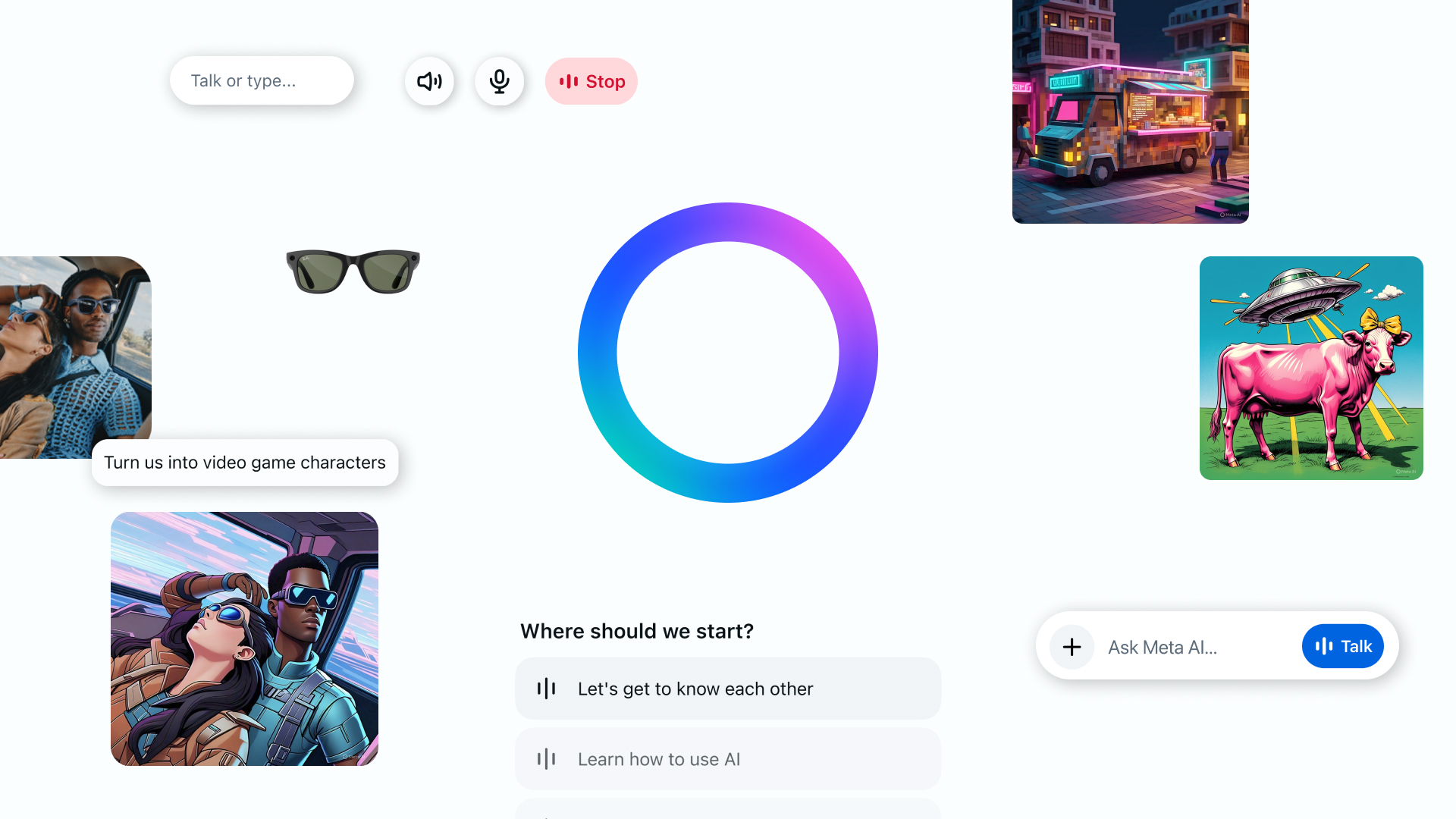
That’s where Meta is most comfortable. They’re great at picking up proven ideas and scaling them beyond imagination. Original moonshots? Not so much.
The Metaverse won’t disappear entirely. Gaming, niche communities, and industrial simulations will keep parts of it alive. But that big Meta dream where everyone is living, working, shopping, and hanging out in VR will remain exactly that—a dream.
Like it or not, the Metaverse era is done. It might have come in with a bang, but it now departs with a whimper.