






Social media, in its ideal form, can be a good place for information sourcing. Whether it’s a news update, catching up with the latest trends, memes or the occasional hot tea that wasn’t meant to reach the group chat but somehow did.
However, it’s also a place of some annoying (and even harmful) habits that crop up every once in a while. Whether it is online bullying, the occasional ‘ragebaiting’ or even ‘engagement farming’, social media can have you rolling your eyes hard.
And lately, one particular behavior has quietly become unavoidable. Vagueposting.
You’ve seen it. You may have scrolled past it today. This is posting intentionally cryptic, ambiguous, or incomplete status updates on social media, often to express negative emotions (like anger or sadness) without providing context.
It is designed to get attention, stir up drama, or prompt followers to ask, “What’s wrong?” or “What’s happening?” and it’s annoying.
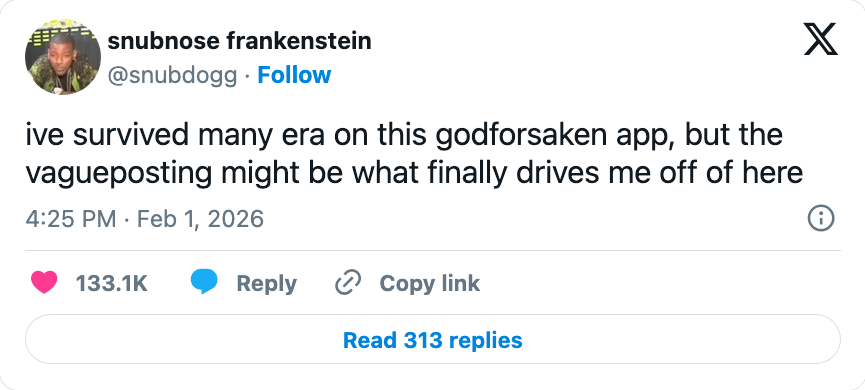
A post drops with just enough emotional weight to feel important but not enough information to mean anything. For instance, when someone says they’re “disappointed”, another hints at some sort of betrayal.
Someone else then announces they’ve been “shown dust” or “seen people for who they really are” out of the blue. Providing no names, no context or explanation. Just a cloud of mystery, floating on your timeline, daring you to care.
This is the essence of vagueposting: posting intentionally unclear messages, usually charged with emotion, designed mainly to spark concern, curiosity, or speculation.
It’s not new, but it has become far too common, especially in an era where attention spans are significantly shortening and reactions are social proof. On the surface, it looks like vulnerability, but really, it often feels like emotional clickbait.

Ironically, vagueposting will often defeat its purpose. The first vaguepost is met with concern, the second with curiosity, but by the fifth, it’s not worth it anymore.
If they don’t care to attach some sort of context, then I won’t care to find it out anymore. Constantly decoding cryptic messages is exhausting in a digital world already overloaded with information.
At that point, even the endless “Hey @Grok, what does this mean?” posts start to feel… tolerable.
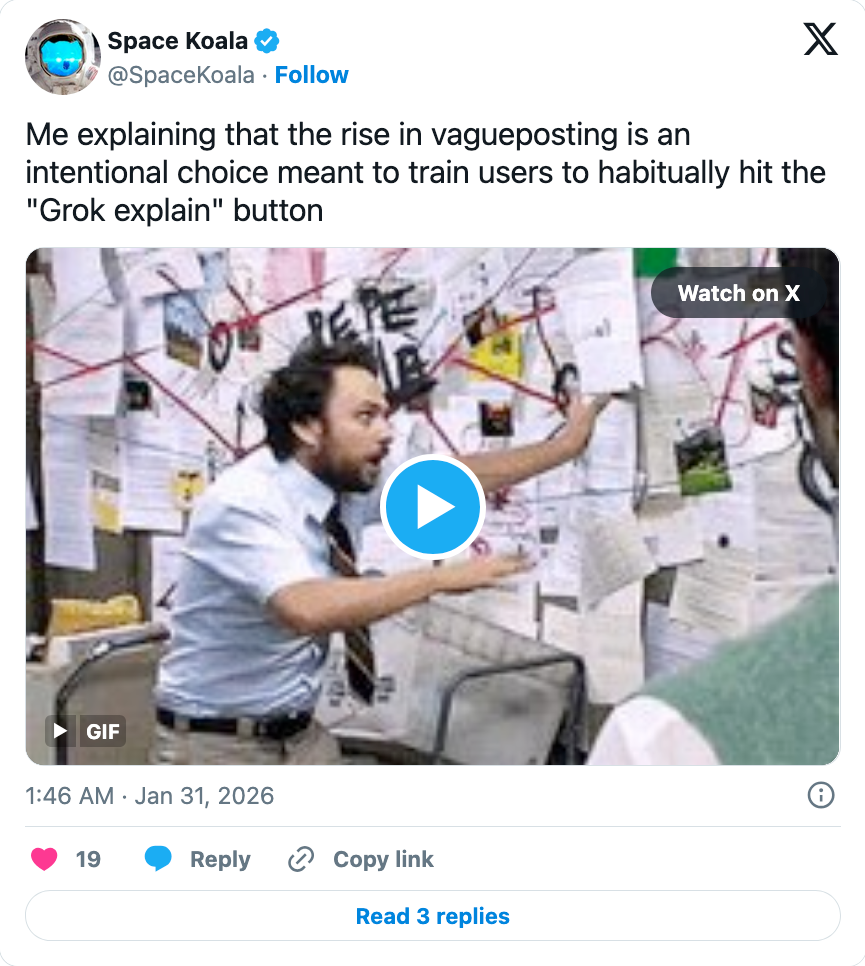
There’s nothing wrong with privacy. No one owes social media a full breakdown of their life. But there is a difference between choosing not to share and sharing just enough to provoke worry. One is a boundary, and the other is bait.
Vagueposting may look like harmless venting, but it’s really just low-effort engagement farming dressed up as mystery, dropping emotional breadcrumbs on Twitter with no context, then expecting the internet to do the heavy lifting.
It is quietly manipulating followers into concern and curiosity, fueling unnecessary speculation and drama, and cluttering already oversaturated timelines with engagement farming.
Over time, this constant decoding will exhaust users to the point that they stop caring altogether. And if you don’t want to talk about something at all, remember, a wise man once said nothing at all.
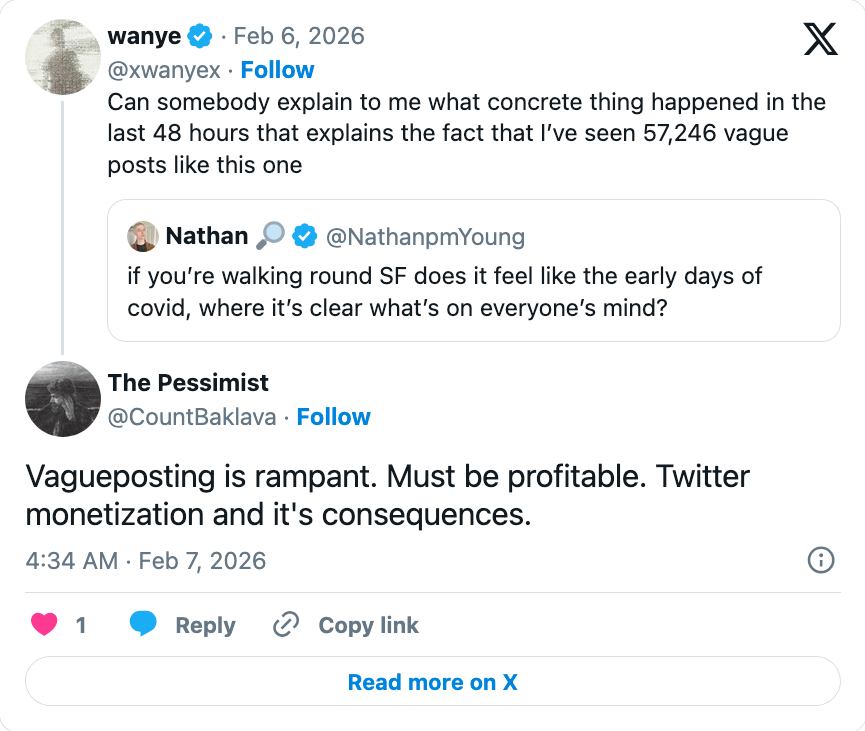
So the next time a post pops up declaring, “One day I’ll tell my story,” it might be worth asking who that post is really for. After all, genuine connection doesn’t come from mystery or manipulation. It comes from honesty, even when it’s simple, even when it’s quiet.
More importantly, the internet could use a lot less cryptic tension and a lot more real conversation.