




Kenya is scaling its power sector from the current installed capacity of 3,840.8 MW as of June 2025 and intends to add approximately 253 MW to the national grid in the next 3 years.
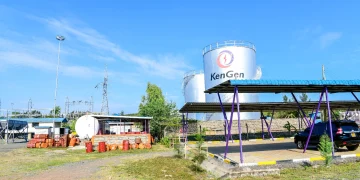
Kenya Electricity Generating Company (KenGen), the leading electric power generating company in Kenya and the largest energy producer in East Africa, is implementing projects that will contribute to this new capacity.
Notably, KenGen is executing the projects under its G2G 2034 Strategy, a roadmap aimed at transitioning the country to green energy. President Ruto reiterated the commitment to green energy production in a meeting with business leaders on August 6, 2025.
He stated, “Before 2030, we should have doubled the grid that we have. And we should try to do it with renewable energy.”
KenGen Olkaria Projects
One initiative of KenGen is the Olkaria I Rehabilitation Project. Toshiba ESS is currently executing the Olkaria I modernization project, with a planned commissioning date of December 2026.
The upgrade will enhance the plant’s efficiency, raising its installed capacity from 45 MW to 61 MW.
Secondly, KenGen is executing the 80.3 MW Olkaria VII geothermal power project. This was confirmed after the cabinet approved the project in July 2025.
Power from the plant is expected to come online by June 2027. This project draws funding from the European Investment Bank and the Government of Japan.
According to a statement from the cabinet meeting, “The project will tap 19 production wells, with plans for seven more over its 25-year operational life.”
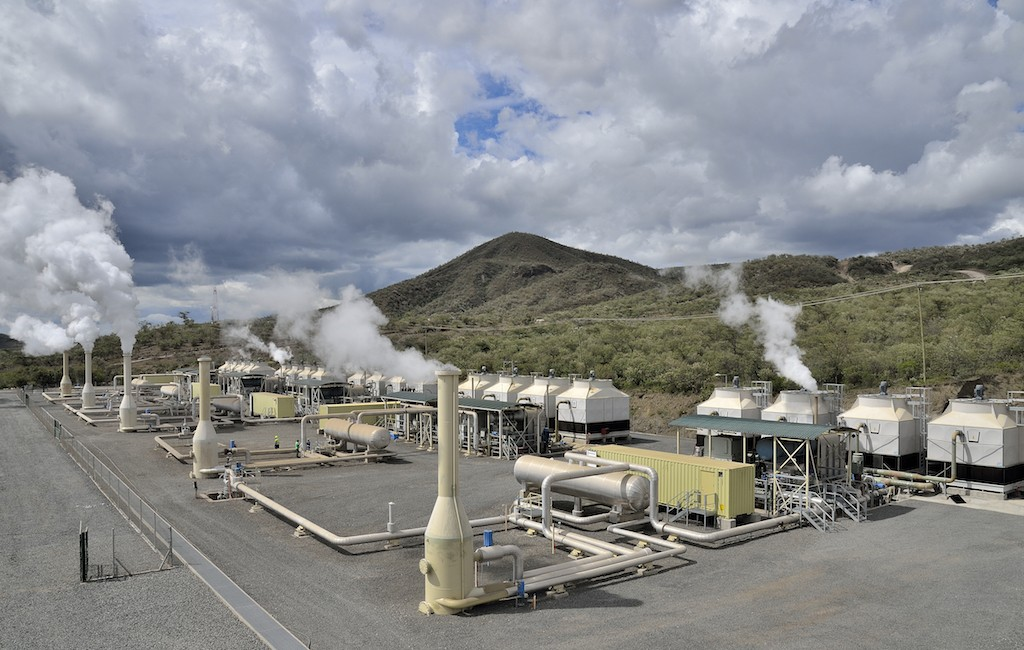
Lastly, KenGen is expected to generate 58.42 MW through wellhead power generation units on a build-lease-operate and maintain basis at the Olkaria Geothermal Field. Power from these wellheads is expected to be part of the grid by 2027.
As the first country to adopt the wellhead method, Kenya can generate power from a single steam well. This contrasts with traditional geothermal setups, which require steam to be collected from numerous wells through a piping system.
To enhance strategy, the power-generating company is currently constituting a board of geothermal experts.
Seven Forks Solar Project
This is a project domiciled at the home of KenGen’s hydroelectric power production. A partnership between the Kenyan government and the French government through the French Development Agency (AFD), it is expected to deliver 42.5 MW of solar energy to the national grid.
The project is located on 80 hectares of KenGen’s land, a site that boasts a high solar irradiation rate of over 2,000 kWh/m².
The partnership was signed back in July 2024, and the project is expected to come online in 2027. Integration of this new capacity is expected to complement the hydroelectricity generation during the day and save water for electricity generation at night, especially during drought.
READ: Kenya Leads in East Africa Solar Panel Purchase as Africa’s Imports Break Records
Hydro-power Upgrades
Hydroelectricity remains one of Kenya’s main power sources. In line with this, the government secured KES 5 billion to upgrade and expand the Gogo Hydro Power Plant located in Migori County.
This is the first major upgrade on the 65-year-old power plant and will see its production increase from 2 megawatts to 8.6 megawatts. Funding for this project is largely from the German Development Bank, KfW, and a grant from the European Union.
Completion of the project is expected to be in 2029.
Another project is raising the height of the Masinga Dam, the primary reservoir in the Seven Forks cascade, by 1.5 meters. This elevation will expand the reservoir’s storage capacity by 12%, raising the volume from 1,370 hm³ to 1,540 hm³.
By capturing more water, the project boosts hydro-power availability and safeguards downstream communities against flooding. It is expected to be completed in 2029.
KenGen Energy Storage System
KenGen is advancing a 200 MWh Battery Energy Storage System (BESS) to capture surplus power from variable renewable energy (VRE) sources, primarily excess energy generated by geothermal plants.
An initial 100 MW BESS project is funded by the World Bank and is expected to be operational in 2027.
BESS technology will reduce the impact of intermittency on the grid and store power for use during peak hours. The aim is to reduce the frequency of power outages in the national system.
Last year, the company installed a 1.16 megawatt-hour (MWh) BESS that serves KenGen’s 52- kilowatt Modular Data Centre (MDC) at its head offices in Nairobi.
| PROJECT | OUTPUT (MW) | COMMENCE OPERATIONAL DATES (COD) |
| Olkaria 1 Geothermal Rehabilitation | 63.3 | 2026 |
| Olkaria VII Geothermal | 80.3 | 2028 |
| Wellhead Leasing | 58.43 | 2027 |
| Battery Energy Storage System (BESS) | 100 | 2027 |
| Seven Forks Solar PV | 42.5 | 2027 |
| Gogo Redevelopment | 8.6 | 2029 |
| Raising Masinga | – | 2029 |
The Kenyan government has secured a total of USD 650 million (Kshs 84.03 billion) to finance these projects.
Increase in Kenya’s Electricity Peak Demand
The projects to increase installed capacity are crucial as electricity demand in the country continues to grow.
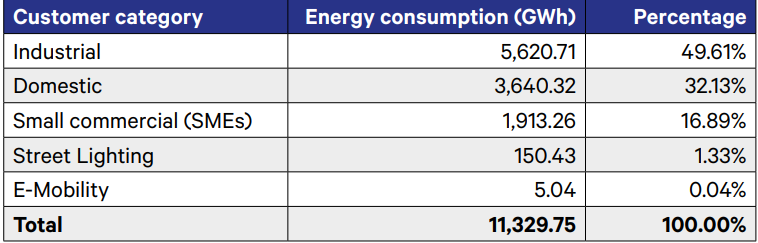
According to the Energy and Petroleum Regulatory Authority (EPRA) report of the financial year ending June 2025, “Consumption rose across all categories, large commercial and industrial, small commercial, domestic, street lighting, and electric mobility , each achieving all-time highs.”
Peak demand represents the maximum electrical load experienced by a power system within a specific period. It serves as a critical metric for determining the total generation capacity required to satisfy the highest simultaneous power requirements of all connected consumers.
Kenya’s peak power demand reached a new high of 2,444.40 MW in January 2026, up from the demand in August, when it hit what was then a new record electricity demand of 2,362.28 MW.
Growth has been consistent, as January’s record is a rise from December 2025’s 2,439.06 MW.
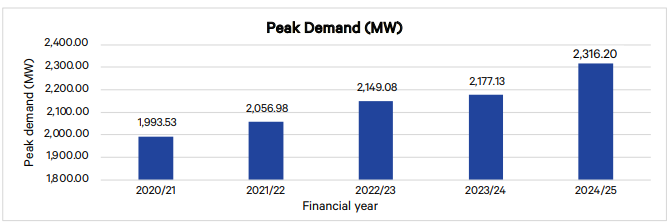
The Kenyan government projects that annual power demand will grow by 100 MW, and EV energy needs are expected to reach 334 MW peak demand by 2032.
Official energy data reveals a fourfold increase in e-mobility power usage, reaching 5.04 GWh for the entire 2024/2025 fiscal year. Further, Kenya’s industrial strategy will also require over 1,000 MW in new capacity by 2032.
Kenya Electricity Importation
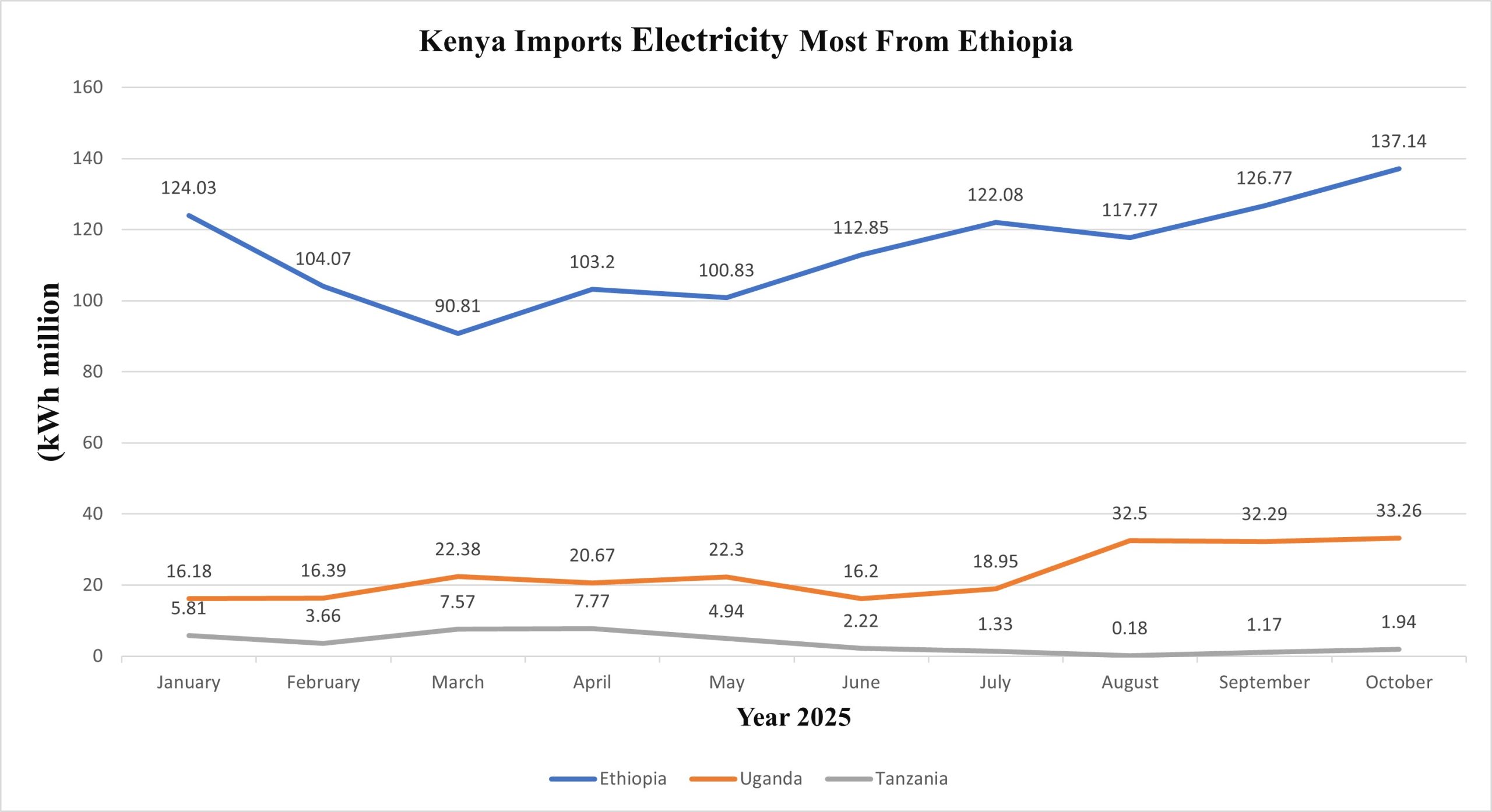
Kenya is now interconnected with the grids of Ethiopia, Uganda, and Tanzania, enabling trade and advancing the vision of the Eastern Africa Power Pool. This is important, as the country is also reliant on power imports.
The Kenya National Bureau of Statistics (KNBS) reports indicate that Kenya’s reliance on power imports surpassed its thermal energy production for two consecutive years.
Imports reached 1,530.27 million kWh in 2024 and grew to 1,721.12 million kWh in 2025, consistently staying ahead of the output from local diesel-fired thermal plants.
READ: How Kenya Ranks in Global Electricity Prices
Ethiopia, Kenya’s primary external power provider, has been increasing its supply to the country, as has Uganda.