








Safaricom has long been Kenya’s most dominant telecommunications company. Most Kenyans know it for M-PESA, for mobile data, and for a customer service line that can feel like a lottery.
Now the company is positioning itself as a technology partner for businesses, from small retail shops to schools and large corporations. The company recently unveiled a package of digital tools it is selling directly to businesses under the Safaricom Business brand.
The suite covers five broad areas, which include school administration software, a point-of-sale system (POS) for shops and wholesalers, a human resources and payroll tool, a communications platform, and a locally built enterprise resource planning system (ERP).
To understand what this means, it helps to know what these tools actually do, who else is offering them, and why this particular move from Safaricom matters.
What Safaricom Is Actually Selling
The portfolio covers five areas. There is a school management system that handles everything from student enrollment and lesson scheduling to fee billing and exam records.
There is a POS product for retail and wholesale businesses, built to work on mobile phones and designed to track sales staff in the field, manage stock across multiple locations, and handle procurement.
There is an HR and payroll platform that processes salaries, tracks attendance through biometric readers, and covers recruitment and staff performance.
There is a communication suite that bundles voice calls, video, chat, SMS, and WhatsApp into one platform for businesses that run customer service operations.
Lastly, there is an accounting and business management system built specifically for Kenya, with support for the KRA’s invoicing requirements.
Taken individually, none of these is an entirely new concept, but taken together, they represent Safaricom positioning itself as a one-stop technology provider for Kenyan businesses.
Where Safaricom Has an Edge, and Where It Does Not
The comparison shows that Safaricom is not simply entering a space that banks and other players dominate. In several areas, the banks only partially compete, and the current solutions are fragmented, but that does not mean empty.
Across each product category, there are established players, many of them Kenyan-built, that Safaricom will have to displace or outmaneuver or work alongside.
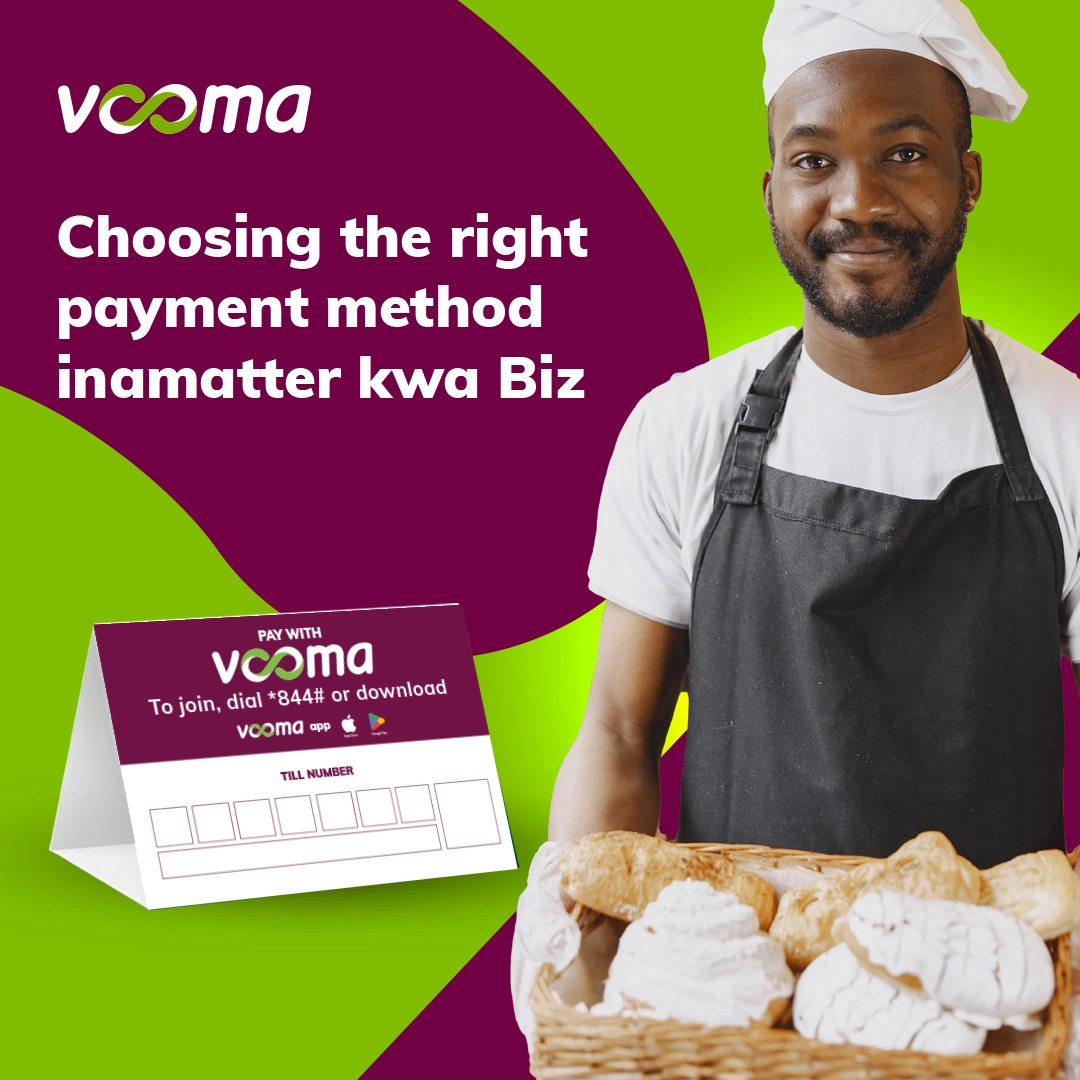
Some banks have been doing pieces of what Safaricom is now offering as a single package. KCB’s Vooma Till consolidates payments from M-PESA, the KCB app, and other sources into one merchant account, and its tap-to-phone service turns an Android smartphone into a card reader, lowering the barrier for small merchants who cannot afford a dedicated terminal.
For schools, KCB has Lipa Karo, a fee payment solution tied to M-PESA and bank accounts. Through its Buni APIs, it also lets businesses link their existing ERP or POS systems directly into KCB’s banking infrastructure.
Family Bank has moved in a similar direction, particularly for small and medium enterprises. Its DigiPay platform handles school fee collection; it has a strong relationship with the Kenya Private Schools Association, and through its subsidiary PesaPap Digital, it has been building more integrated digital products.
Both banks are strong on payments and payroll processing. Safaricom is now entering everything else and bringing M-PESA into the mix alongside it.
Beyond the banks, each product category has its own set of incumbents. On school management, the real competition is local EdTech companies.
Zeraki, the most prominent, covers exam analytics, attendance, timetabling, parent communication, and school finance in one platform and is deeply embedded in Kenyan schools.
Safaricom’s offering covers similar ground, which means it is going directly at a locally built product that already has significant institutional trust behind it.
In HR and payroll, the dedicated software market is occupied by companies like Workpay, which handles automated payroll, statutory deductions for PAYE, SHIF/SHA, and NSSF; leave management; performance tracking; and mobile wallet disbursement.
Sage also offers a Kenya-localized payroll product. These are not lightweight tools, and the competition already builds for Kenyan compliance as its core purpose.
On retail POS, Pesapal offers terminals, payment gateways, M-PESA and card acceptance, and e-commerce integrations, with KCB now holding a stake in the company. DPO Group and JamboPay are also active.
Most businesses think of a POS system as simply the machine or app that takes payments. Safaricom’s version does that but also tracks stock levels and lets managers monitor field sales teams in real time.
Inventory tracking is already a standard feature across local POS products, including Pesapal’s own RACK system, and field sales monitoring has been a baseline requirement in FMCG, distribution, and other sales-heavy industries for some time.

What Safaricom is offering here is a capable, integrated package, but not a product that breaks new ground.
The communications platform is where Safaricom’s case is hardest to argue against. Affordable call center tools exist in Kenya, but no local provider currently bundles voice, video, chat, SMS, and WhatsApp into one platform that is backed by telecoms-grade infrastructure.
Airtel is the only operator with comparable network reach but does not offer anything in this space. Global vendors like Genesys do, but their pricing is built for large multinationals.
Safaricom is positioning itself as the first to bring that full bundle to Kenyan businesses at a price point that could actually work for an SME.
The ERP story is also similar, where international platforms like SAP, Microsoft Dynamics, and Oracle dominate the market but are built for global standards and require expensive customization before they work for a Kenyan business.
The biggest pain point is KRA’s eTIMS system, which legally requires all tax invoices to be transmitted to KRA in real time. Adapting a foreign ERP to do that is neither simple nor cheap.
If Safaricom’s ERP has that compliance built in from the start, it can remove what has historically been the most costly and frustrating hurdle for Kenyan businesses trying to adopt proper enterprise software.
The threat to small players is not that Safaricom builds better software. It is that Safaricom does not need to.
With 45 million subscribers, M-PESA in every transaction, and the largest distribution network in the country, it can bundle, discount, and cross-sell in ways no local developer can compete with.
The optimistic reading is that Safaricom brings digitization to businesses that never had it. A school in Kajiado still running fee records in a handwritten ledger, a wholesale distributor in Eldoret tracking stock on a spreadsheet, or a small retailer in Kisumu with no way to monitor his sales team in the field.
These are businesses that existing software companies never reached, either because the products were too expensive, too complicated, or simply never marketed to them.
If Safaricom’s distribution muscle brings digital tools to that tier of the market, that is a net gain for the Kenyan economy regardless of what it does to the competitive landscape above it.
The harder truth is that the businesses already using local software are now squarely in its sights, and convenience is a powerful reason to switch. That is where the small players will feel it most.
What This Means for Businesses and the Market
For any business evaluating these tools, the pitch is coherence. Instead of buying a payroll system from one vendor, accounting software from another, and a communications platform from a third, Safaricom is offering a single provider whose products are designed to work together.
That is undoubtedly useful, provided the integrations function as described and the support is reliable.
The risks are worth naming plainly. Concentrating core business operations with one vendor, particularly one that also controls the country’s primary payment network, creates dependency.
If pricing changes, service quality drops, or a dispute arises, the cost of leaving becomes substantial. A business that has moved its HR, accounting, POS, and communications to a single provider does not switch quickly or cheaply.
There is also the data question. Systems of this kind generate detailed information about a business: payroll costs, sales volumes, customer interactions, and supply chain activity.
Where that data sits, who can access it, and what the terms of use permit are questions every business should read carefully before signing on.
Zooming out, what Safaricom has assembled is coherent as a strategy even if its effects on the broader market are mixed. The banks have responded to the digital moment by strengthening payment infrastructure.
Safaricom is moving to sit above the payment layer and deeper into the daily operations of businesses. Those are different bets on where value accumulates in the economy, and time will determine which read is correct.
For the small technology companies caught in between, the challenge is to offer what a large platform cannot easily replicate: specialized knowledge, local relationships, faster response times, and the kind of flexibility that a corporate product cycle rarely delivers.
Some will find and hold that space; others may not.