






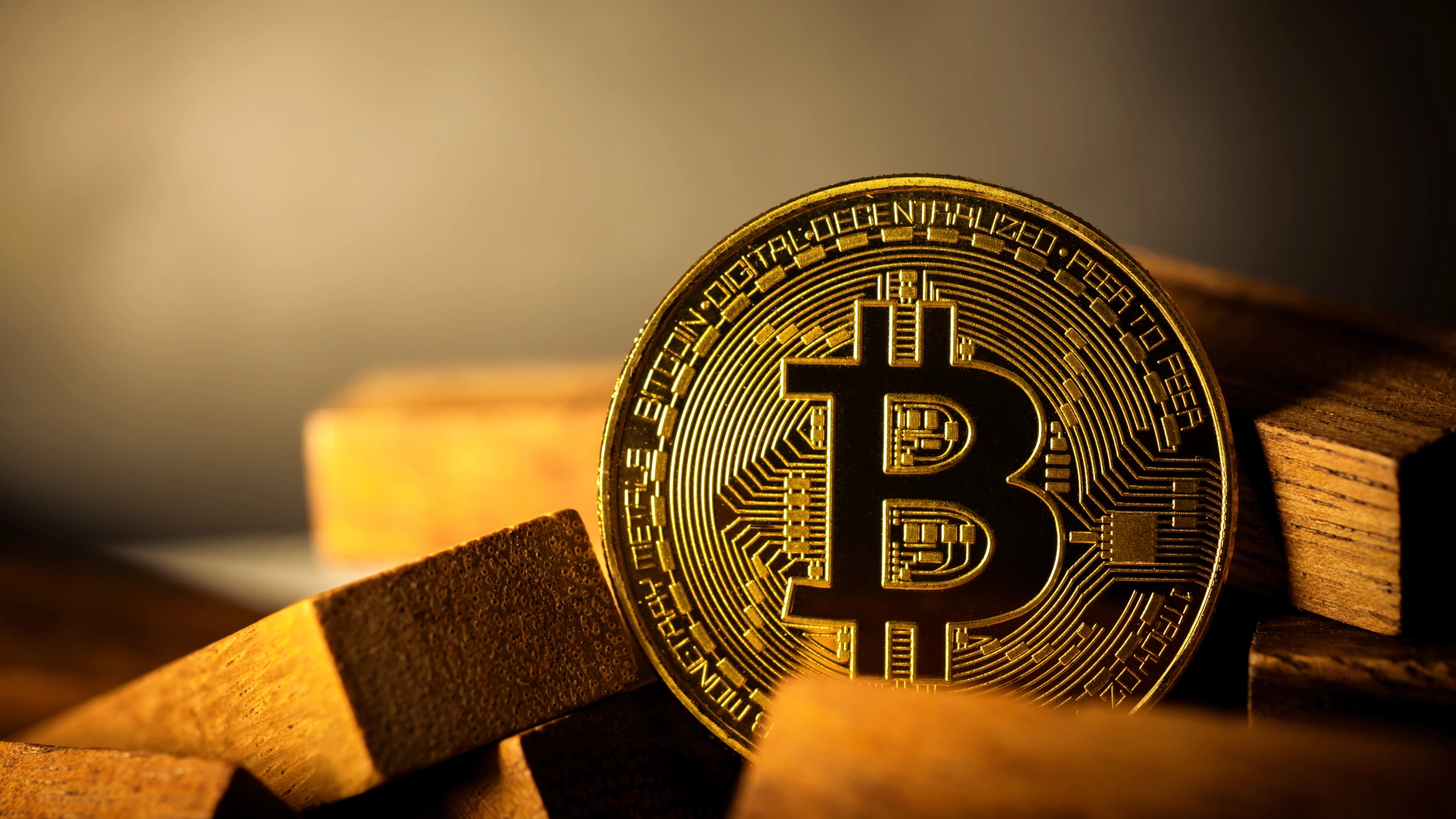
For 17 years, the question of who invented Bitcoin has been one of the internet’s most enduring unsolved mysteries. This week, the New York Times thinks it finally has the answer, and the man they’re pointing at is not happy about it.
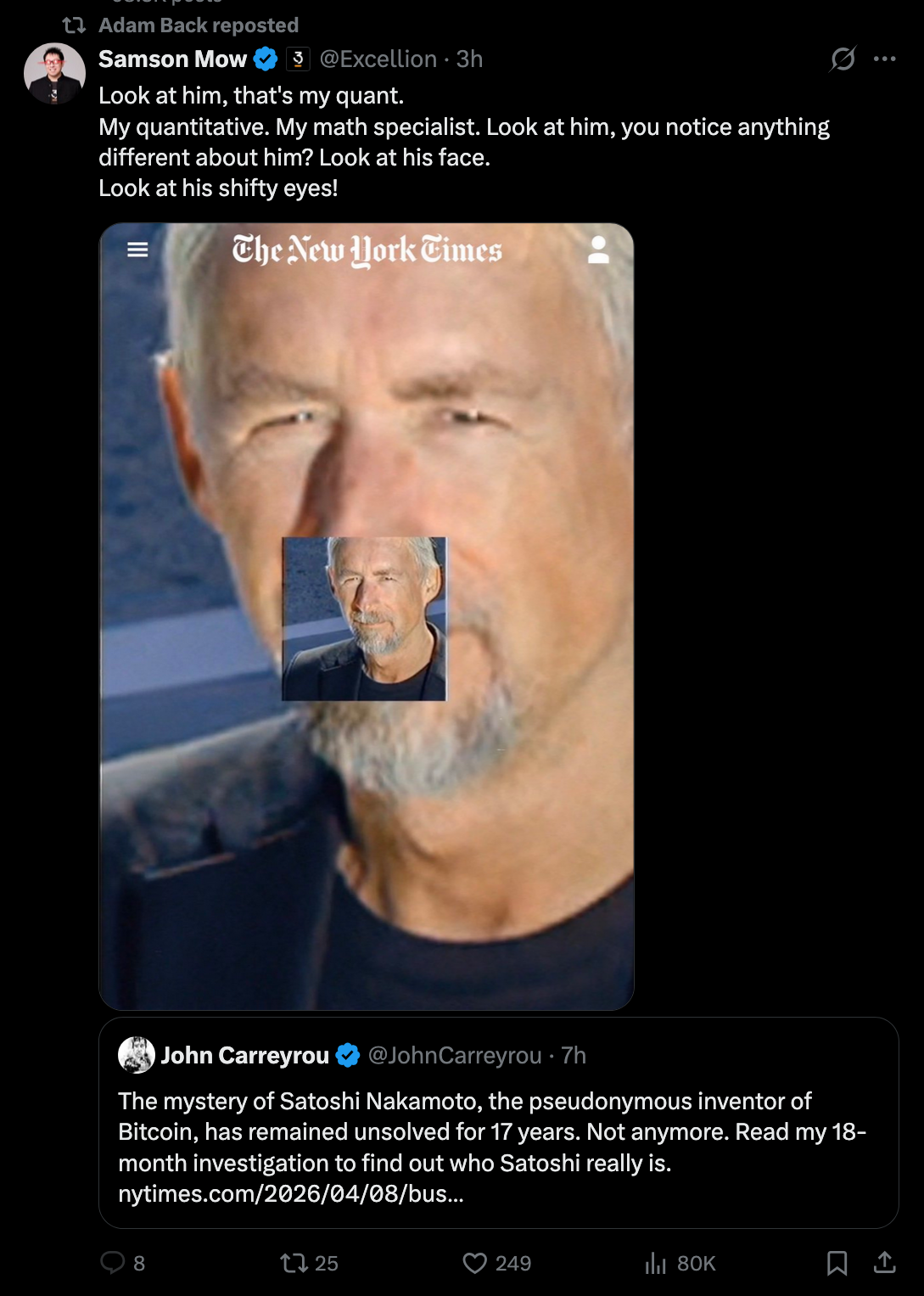
The paper published a lengthy investigation by John Carreyrou (the journalist who brought down Theranos) naming Adam Back, a 55-year-old British cryptographer, as the person behind the Satoshi Nakamoto pseudonym.
Back’s response was swift and blunt, saying he’s not Satoshi, he’s never been Satoshi, and he’d like everyone to stop asking.
So what’s the actual evidence?
Carreyrou and his colleague Dylan Freedman spent over a year combing through thousands of old internet posts, building a database from three mailing list archives where early cryptographers congregated in the 90s and 2000s.
They ran three separate writing analyses comparing those posts against Satoshi’s known writings. All three pointed to Back.
The stylometric case is rather interesting. Satoshi had a very specific set of writing quirks, including two spaces between sentences, British spellings, hyphenating “proof-of-work,” writing “bugfix” as one word and “half way” as two, and inconsistently alternating between “e-mail” and “email.”
Among hundreds of mailing list subscribers, the NYT claims only Back matched every single one of those tics.
Beyond writing style, Back invented Hashcash, a proof-of-work system that Satoshi directly cited in the Bitcoin white paper. In the late 1990s, Back was already sketching out ideas for decentralized electronic cash that would resist government interference, which is essentially the philosophical blueprint Bitcoin later followed.
He has a PhD in distributed computer systems. Bitcoin is a distributed computer system. He used the same programming language as Satoshi.
Then there’s the timing. For years, Back was a constant, vocal presence whenever electronic cash came up in cypherpunk circles. When Bitcoin launched in late 2008, he went completely quiet.
6 weeks after Satoshi vanished from the internet in 2011, Back reappeared and posted about Bitcoin for the first time. The NYT frames this as him stepping out of one identity and back into another.
Back’s rebuttal is that it’s all coincidence and confirmation bias. He told the BBC the similarities exist because he and Satoshi had overlapping interests and experience, and of course they used similar language and ideas.
He also pushed back on the claim that he was silent during Bitcoin’s early days, saying he actually did post on forums during that period.
On X, he added a self-deprecating note, “Kicking myself for not mining in anger in 2009,” a dig at the idea that if he were Satoshi, he’d already be sitting on a Bitcoin wallet worth roughly $70 billion.
That figure is part of why this mystery refuses to die. Satoshi mined over a million Bitcoin in the early days, representing about 5% of the total supply that will ever exist.
Whoever Satoshi is, they are almost certainly one of the wealthiest people on the planet, if they still hold those coins and haven’t lost the keys.
Back is not the first person to be named. In 2014, Newsweek identified a Japanese-American man named Dorian Nakamoto, a claim that was effectively debunked.
In 2015, Wired and Gizmodo pointed to Australian computer scientist Craig Wright, who then declared himself Satoshi and spent years trying to prove it in court. A UK High Court judge ultimately ruled he was not.
Ironically, Back testified against Wright in those proceedings.
An HBO documentary in 2024 landed on Canadian developer Peter Todd, who called it ludicrous and has since provided evidence undermining the claim.
The NYT’s case against Back is the most technically detailed yet, but it still hinges on circumstantial evidence. There is no cryptographic proof and signature from Satoshi’s original keys, which is the only thing that would actually settle the matter.
Without that, it remains a compelling argument, not a confirmed answer.
Back’s own position on the mystery is that he doesn’t know who Satoshi is and thinks the anonymity is good for Bitcoin.