







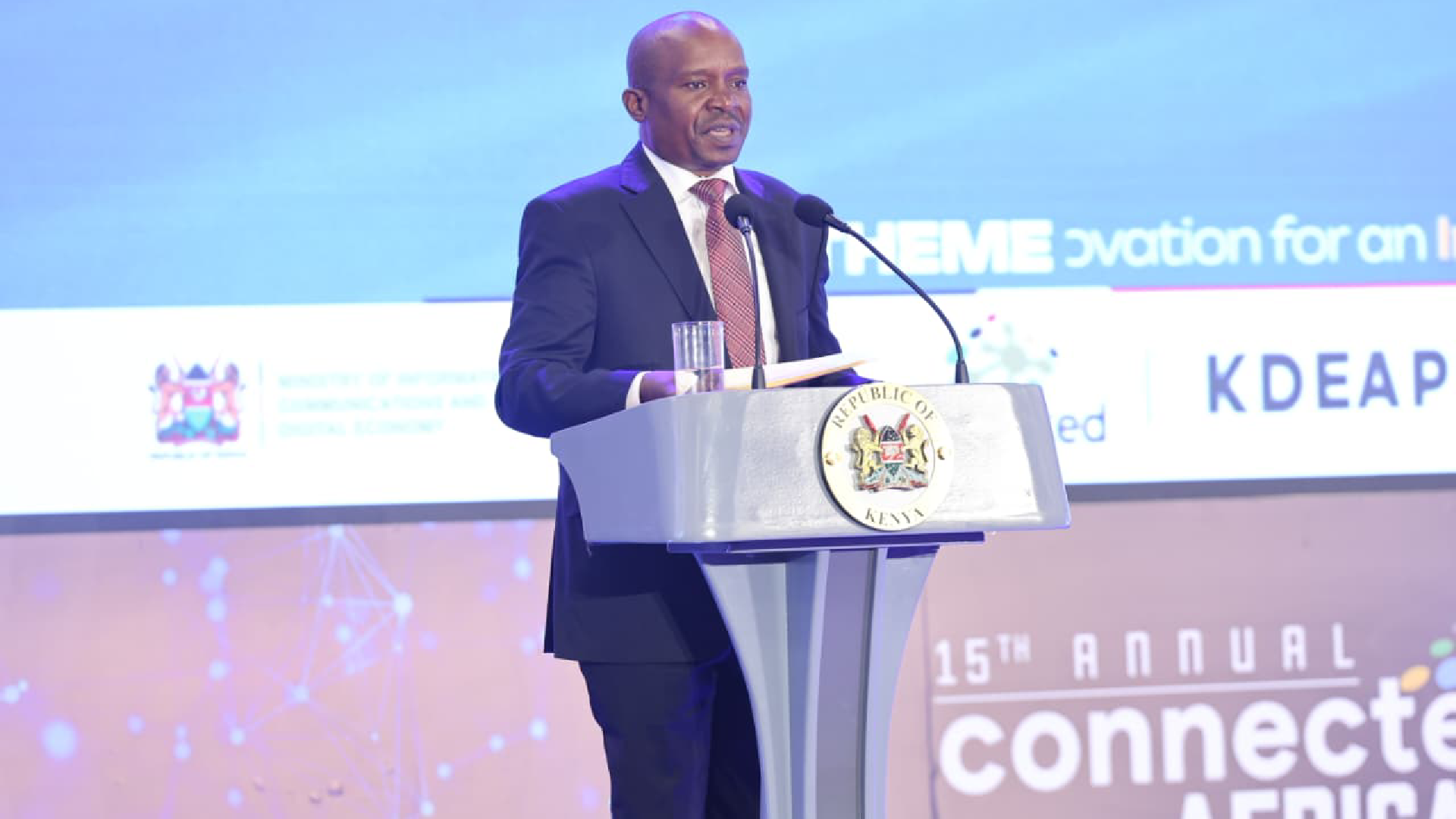
Kenya has launched an ICT Authority Interoperability Framework aimed at pushing the country’s disconnected government systems to communicate, with Deputy President Kithure Kindiki framing the move as a prerequisite for continental digital integration.
The framework was announced at the Connected Africa Summit in Nairobi, where Kindiki told delegates that years of digital investment across Africa had produced capable but isolated systems.
“Too often, we have done so in silos, country by country, platform by platform, regulation by regulation. The result is fragmentation,” he stated.
READ: Connected Africa Summit 2026 Opens in Nairobi to Push Africa’s Digital Unity
The framework sets technical and governance standards that allow government platforms to share data, starting domestically and extending toward regional interoperability.
It targets a problem that various ministers and representatives from various African countries named at the summit in different ways.
Malawi has enrolled roughly 80% of its adults in a national ID program. Those IDs still cannot interface with most of the country’s own government systems.
Uganda’s fiber connectivity runs through Kenya to the Indian Ocean, but the interoperability layer connecting services across the two countries remains underdeveloped.
South Sudan, meanwhile, is midway through building a national data center with no framework yet governing how it connects regionally.
Kenya arrives at this moment with credible infrastructure behind the announcement. The country has laid more than 30,000 kilometers of fiber toward a 200,000-kilometer national target, connected roughly 90% of its population to 4G, and digitized public services through the eCitizen platform.
READ: Kenya Secures Fresh World Bank Funding to Lay 1,270 KM of Fiber in North Eastern
M-Pesa processes transactions equivalent to a significant share of national GDP.
Kindiki was direct that infrastructure alone is not enough. The interoperability framework is, in his telling, as much a political instrument as a technical one. It requires African governments to align policies, harmonize regulations, and build enough trust to allow data to cross borders.
He called for what he termed “public-private-people partnerships,” extending beyond conventional government and industry collaboration to place citizens, farmers, small traders, and youth at the center of delivery.
The summit, convened under the theme “Uniting Africa’s Innovation for an Inclusive Digital Market,” drew ministers and digital economy leaders from across the continent. The ICT interoperability framework gives that conversation a concrete output.
Whether it translates into regional adoption depends on how quickly Kenya’s partners move from the commitments made in Nairobi to implementation at home.