





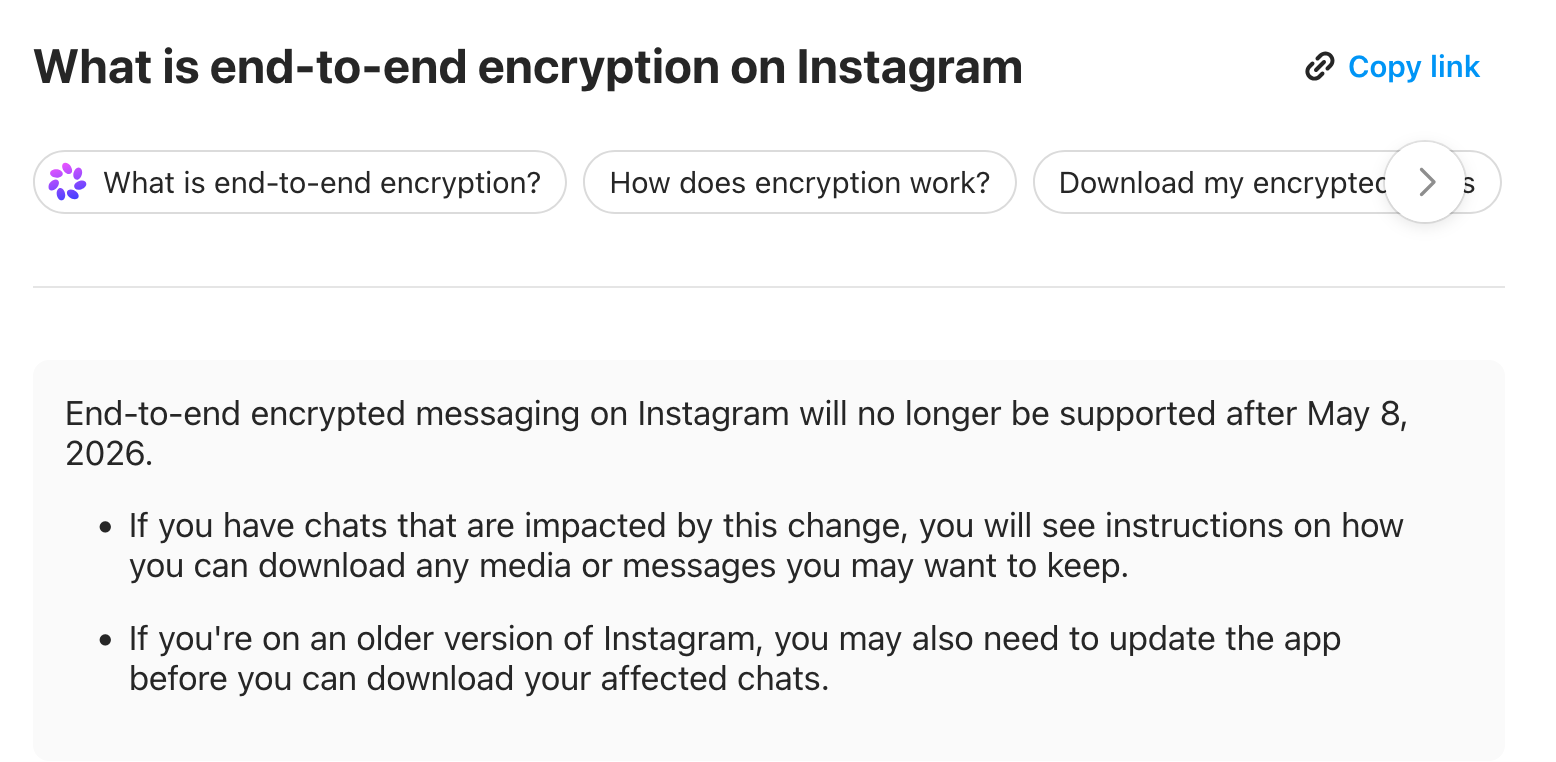
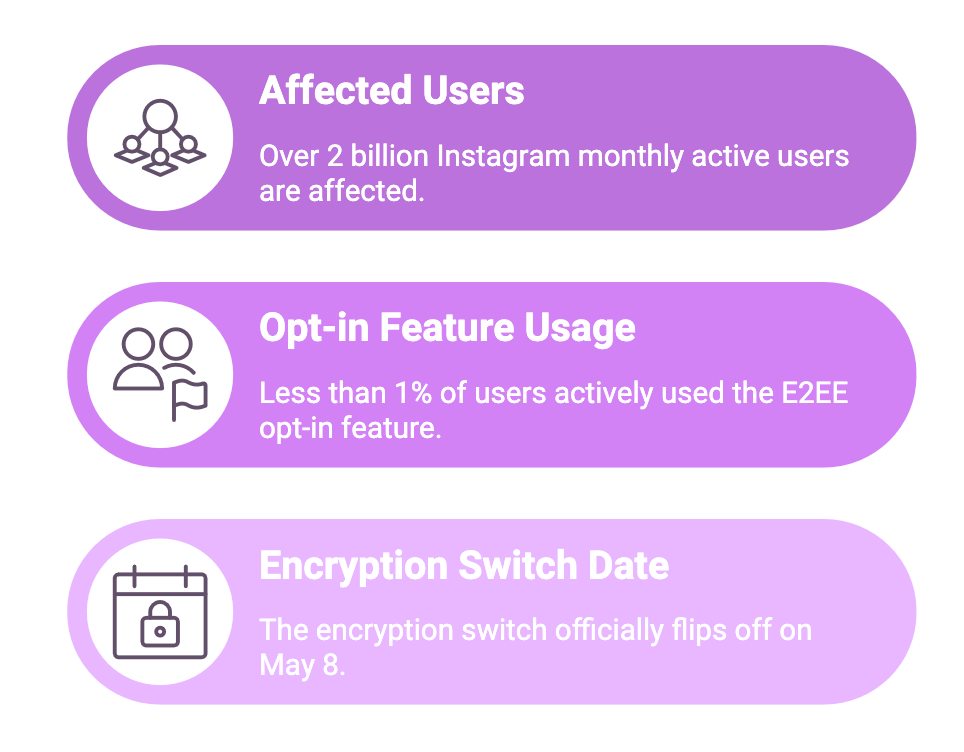
In 2 days, anything you send in Instagram DMs will be, in principle, readable by Meta.
The company is pulling the plug on end-to-end encryption (E2EE) support for Instagram direct messages from May 8, 2026, and its explanation for doing so is so perfectly crafted that it almost sounds reasonable. Almost.
The official line is that “very few people were opting in,” which is true, but then again, the feature was never meant to be easy to find. When E2EE first appeared on Instagram in 2021, you had to dig through menus to start a “secret conversation.”
Most people never knew it existed, with Meta making privacy a scavenger hunt, and then pointed at the empty participation trophy and said, “See, nobody wanted this.”
Dissecting the “Safety” Argument”
Meta’s other justification for pulling the plug on E2EE is safety in the lines of the platform needing to scan messages for scams, harmful content, and illegal activity.
Fair enough, that’s a real problem, but the irony is that the classical definition of digital safety is protecting your data from anyone seeing it without your consent.
Meta is arguing that its access to your messages is what keeps you safe. The padlock (encryption), they say, is the problem.
To be fair, Meta has stated it does not currently scan private user DMs for AI training on Instagram unless you actively loop in Meta AI within a chat.
This is fine, but removing E2EE dismantles the technical barrier that made that promise enforceable. Right now it is a corporate policy.
Without encryption, it is just a ‘pinky promise’ from a company that is not known for respecting personal data; remember Cambridge Analytica?
Is Instagram Just Copying TikTok?
TikTok’s DMs have never had E2EE, so you could argue Instagram is simply aligning with the broader social media norm. However, that framing lets Meta off lightly.
Instagram made an explicit move toward encryption, tested it, and rolled it out in select regions, notably prioritizing Ukraine and Russia during a real war in 2022 when people needed it. That was not accidental; it was a statement of intent, and so is reversing it, just a very different one.
TikTok never made such a promise, so it can’t break it, but Instagram did, and now it is.
Do Instagram Users Even Care?
Honestly, most people probably won’t notice the difference. The uncomfortable truth is that a huge chunk of Instagram’s 2 billion users assumed their DMs were private already, not because they verified it technically, but because the app felt personal.
That psychological privacy never matched the technical reality. Standard Instagram chats were never encrypted by default. They were always accessible to Meta; the difference now is that the optional encrypted alternative is gone too.
The people who will feel this most acutely are not the average user posting holiday snaps. It is journalists communicating with sources, activists in countries where the state is watching, and domestic abuse survivors using private messages to reach support networks.
The 99% who never used E2EE will not miss it; however, the 1% who genuinely need it will see this as a betrayal by Meta.
READ: Meta Sued over ‘False’ WhatsApp Encryption Claims
There is a version of this story where Meta is a responsible platform making a pragmatic call about an underused feature. There is another version where a company that generates billions in ad revenue decided that message visibility is worth more than the privacy of its users.
Both versions can be true simultaneously. That is what makes this uncomfortable rather than simply outrageous.
It’s certainly bad for privacy advocates, high-risk users, and the principle that tech companies should be moving toward more encryption, not less.
On the other hand, it’s somewhat fine for the average user who never used the feature anyway. Convenient for Meta, regulators, and anyone who wants more visibility into what 2 billion people are telling each other.
The illusion of choice has been retired, and what replaces it is just the default.