








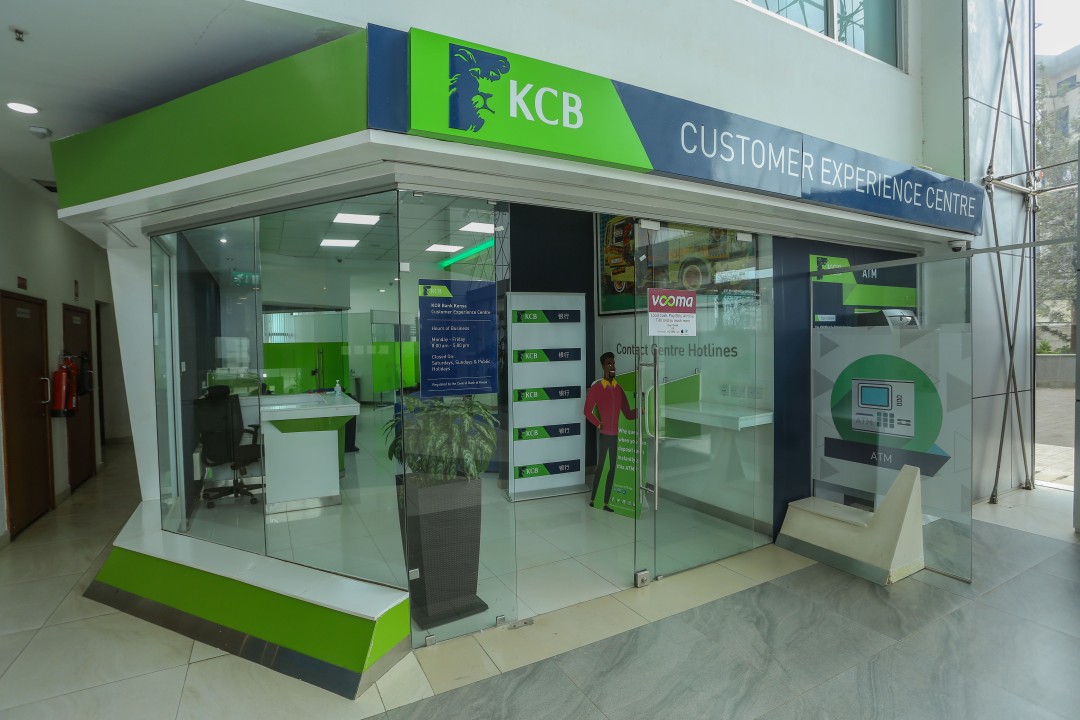
KCB Bank has moved to simplify and lower the cost of sending money between bank accounts, announcing a flat fee of KES 20 on all Pesalink transactions above KES 1,000 up to KES 999,999. Transfers below KES 1,000 will now go through at no charge.
The announcement aligns with the wider industry campaign, “Tuma Direct na 20/-,” which is a coordinated push by Kenyan banks to standardize Pesalink pricing and drive uptake of real-time interbank payments.
The changes apply to transfers made through KCB’s mobile and internet banking channels.
| Transaction Amount | Old Fee (KES) | New Fee (KES) |
| KES 10 – KES 1,000 | Free | Free |
| KES 1,001 – KES 5,000 | 36 | 20 |
| KES 5,001 – KES 10,000 | 48 | 20 |
| KES 10,001 – KES 50,000 | 63 | 20 |
| KES 50,001 – KES 100,000 | 96 | 20 |
| KES 100,001 – KES 200,000 | 120 | 20 |
| KES 200,001 – KES 999,999 | 240 | 20 |
Pesalink is the interbank transfer service run by the Integrated Payment Services Limited (IPSL), a company owned by Kenyan banks. It lets you send money in real time from your bank account directly to someone else’s bank account, even if they bank elsewhere.
Before this change, Pesalink fees varied depending on how much you were sending. That tiered structure meant customers had to think twice about charges or sometimes got surprised by what they were deducted. KCB is now replacing that with one number: KES 20.
The most immediate effect is predictability. If you are a small business owner paying a supplier or someone sending money home, you now know exactly what the transfer costs before you tap send. No guesswork, no mental arithmetic.
READ: Safaricom and Kenyan Banks Recommend PesaLink To Unify Payment Systems
For amounts below KES 1,000, the zero-fee approach opens up a use case that was previously unattractive: micro-transfers. Splitting a bill, paying for a service, or sending someone a small top-up can now happen through a bank account at no cost.
That brings formal banking closer to the everyday, low-value transactions that have long been dominated by mobile money.
KCB Kenya Managing Director Annastacia Kimtai said the move is designed to bring formal banking closer to underserved communities and give SMEs more affordable tools to manage their money.
“By standardizing Pesalink transaction fees at KES 20, we are eliminating price ambiguity and offering a clear, predictable cost for bank-to-bank transfers. This positions Pesalink as a practical and affordable option for individuals and businesses, driving wider adoption of formal financial services. The initiative also aligns with KCB’s broader digital transformation strategy, which seeks to leverage technology and partnerships to offer efficient, customer-centric banking solutions.”
Managing Director Annastacia Kimtai
This is not a KCB-only move, as it is part of a wider industry campaign called “Tuma Direct na 20/-,” coordinated through IPSL. The idea is to get Kenya’s banks aligned on simpler, cheaper Pesalink pricing to grow adoption of instant bank-to-bank transfers across the economy.
IPSL CEO Gituku Kirika has described it as a rallying call for the sector.
READ: PesaLink Debuts Instant Pan-African Transfers In Kenya Shillings
For KCB specifically, the timing aligns with a broader digital push. The bank says its digital channels now handle 99% of all its transactions, with consistent growth of over 20% annually in both volume and value.
Reducing friction on a product like Pesalink is a natural next step in keeping that momentum going.