




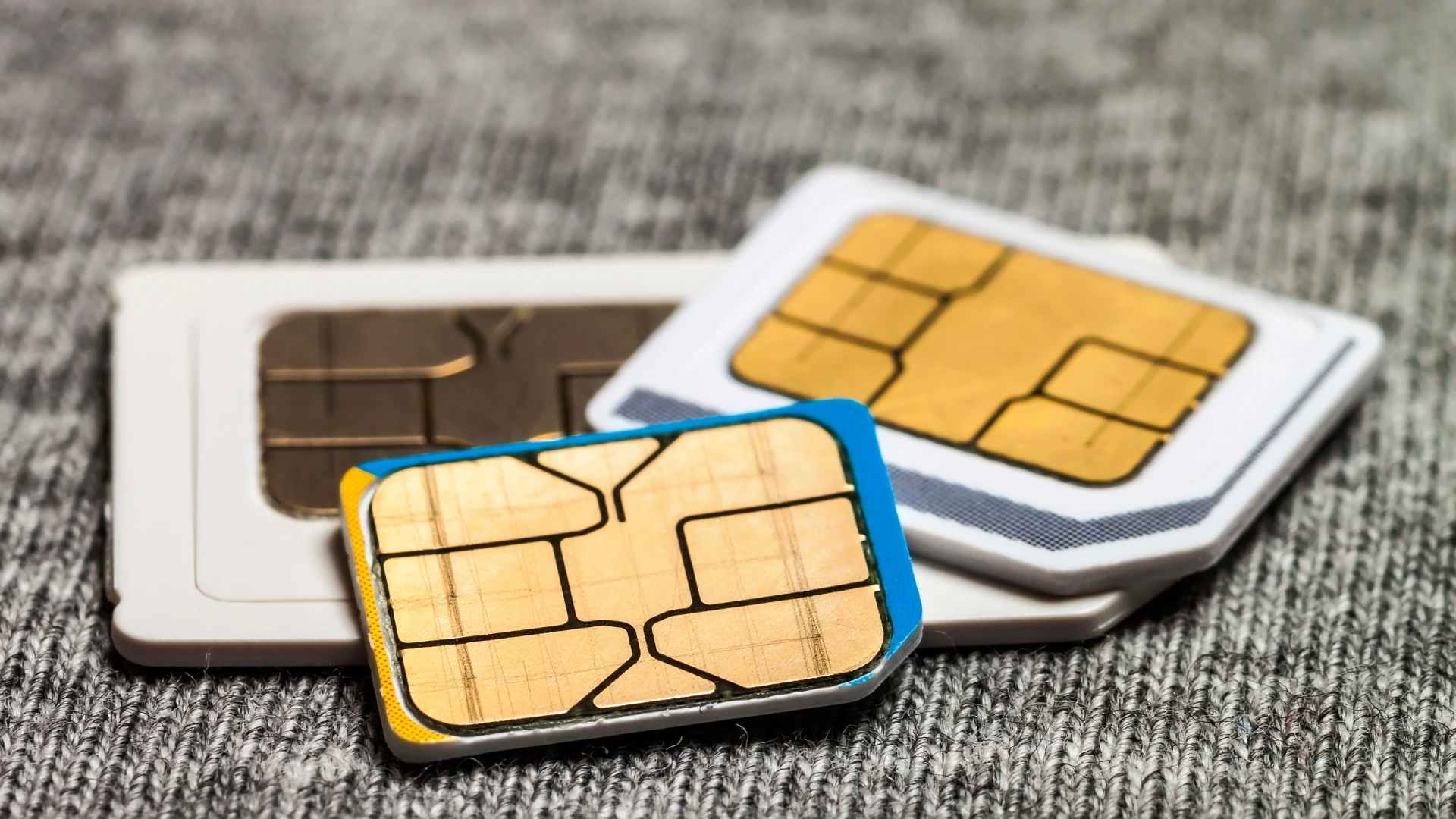
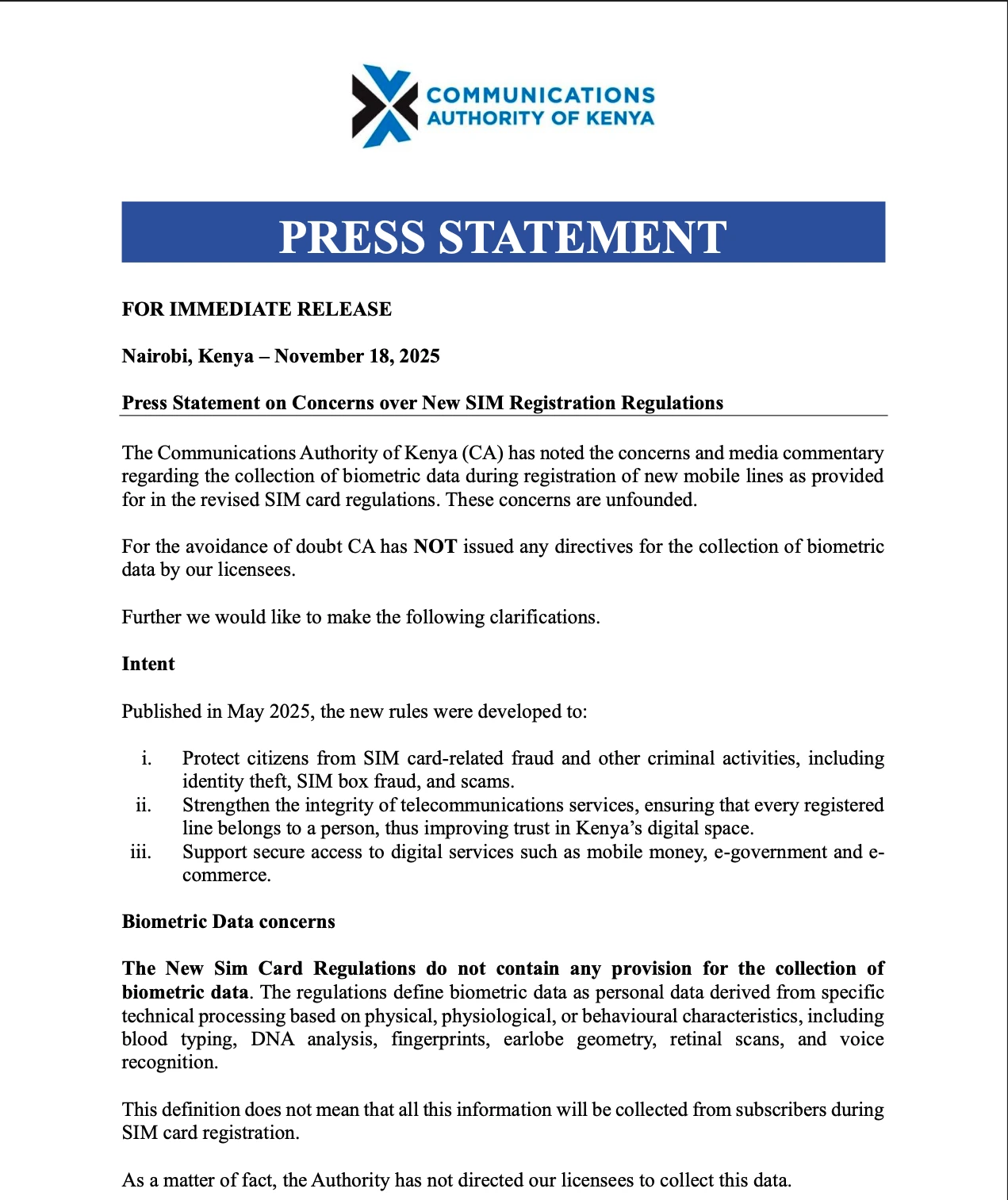
The Communications Authority of Kenya stepped in today to calm growing fears about new SIM card registration requirements, insisting that reports about mandatory biometric data collection are wrong.
According to their statement, the confusion stems from regulations published back in May that included a detailed definition of what biometric data means – everything from fingerprints to DNA analysis to earlobe geometry.
That definition sparked alarm among Kenyans and media outlets, who interpreted it as a shopping list of data the government planned to collect.
That’s not the case, says the CA. The agency clarified that defining biometric data in the regulations doesn’t mean they’re actually collecting it. In fact, they say they’ve issued no directives to mobile operators to gather biometric information from subscribers at all.
So what are the new rules actually about? The CA says they’re designed to crack down on SIM card fraud, identity theft, and the various scams that have become increasingly common as the country’s digital economy has grown.
The goal is to ensure every registered phone line is tied to a real person, which theoretically makes it harder for criminals to operate using anonymous or stolen SIM cards.
These regulations come with privacy safeguards built in, at least on paper. Operators must handle subscriber data according to Kenya’s Data Protection Act and can’t share it without consent or a court order.
CA and the Office of the Data Protection Commissioner will supposedly conduct regular audits and slap penalties on operators who misuse customer information.
There are also enforcement teeth in these rules. Operators can suspend SIM cards if subscribers provide false information or ignore registration requirements repeatedly.
However, the regulations require operators to give notice before any disconnection happens, and they must follow transparent procedures when dealing with customers.
CA framed this as part of a broader cleanup effort. Kenyan mobile users have long complained about relentless spam messages, surprise subscription charges, and unauthorized use of their phone numbers for premium services. The agency says tighter SIM registration processes will help address these everyday annoyances.
The statement also touched on emerging privacy features like number masking on mobile payment platforms, which the CA says it supports. As e-commerce and digital payments continue to expand in Kenya, hiding phone numbers from merchants has become increasingly important for consumer privacy.
This statement suggests CA underestimated how the detailed biometric definition would land with a public that’s increasingly wary of surveillance and data misuse. Whether these assurances will satisfy privacy advocates remains to be seen.