






If you received a notification in recent days warning that CRICFy, a popular pirated live sports streaming app, had been flagged as harmful and should be uninstalled, that was part of Google’s latest crackdown on underground streaming apps.
Google has finally decided to end the Wild West era of Android, and the first casualties are the pirate kings of the sideloading scene.
The tool behind the CRICFy takedown is Google Play Protect, now operating with a more aggressive approach. It effectively acts as a gatekeeper, scanning apps in real time and removing those flagged as suspicious, unstable, or illegal.
As a result, CRICFy TV, a popular app for live sports streaming, became one of the most high-profile casualties. Play Protect is now automatically flagging and uninstalling apps like CRICFy TV, especially on devices running Android with Google services.
The first clear move is against sideloaded apps, meaning apps installed outside the Google Play Store through browser downloads, file managers, USB transfers, or third-party app stores.
These apps are increasingly being flagged as harmful or infected with trojans. Whether they are truly malicious or simply pose legal risks for Google is debatable, but the outcome is the same: they are blocked.
In the past, Android allowed sideloaded apps by default, and Google did not actively stop their installation. That has changed. Play Protect now scans sideloaded apps after they are installed, even if they did not come from the Play Store.
Users can still download and install apps from websites as before, but Google now monitors how those apps behave once installed.
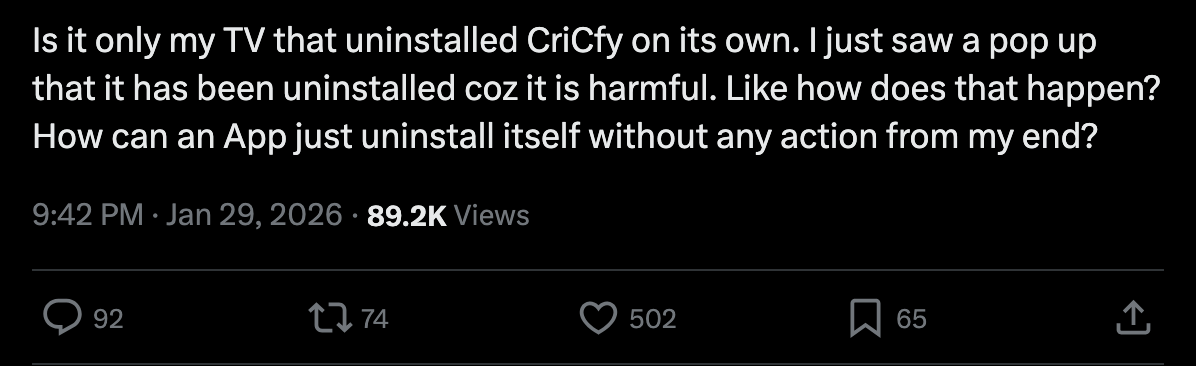
If an app starts acting suspiciously, such as showing malware patterns, requesting risky permissions, connecting to untrustworthy servers, or pulling content from illegal streaming sources, Play Protect can intervene, disable the app, and prompt the user to remove it.
The CRICFy TV incident is just an early sign of a larger shift in Android. The bigger change is Google’s upcoming Mandatory Developer Verification policy, which is expected to roll out globally by 2027.
This new policy began last year, when Google introduced identity checks for developers distributing apps outside the Play Store, tightening its control over the wider Android ecosystem.