







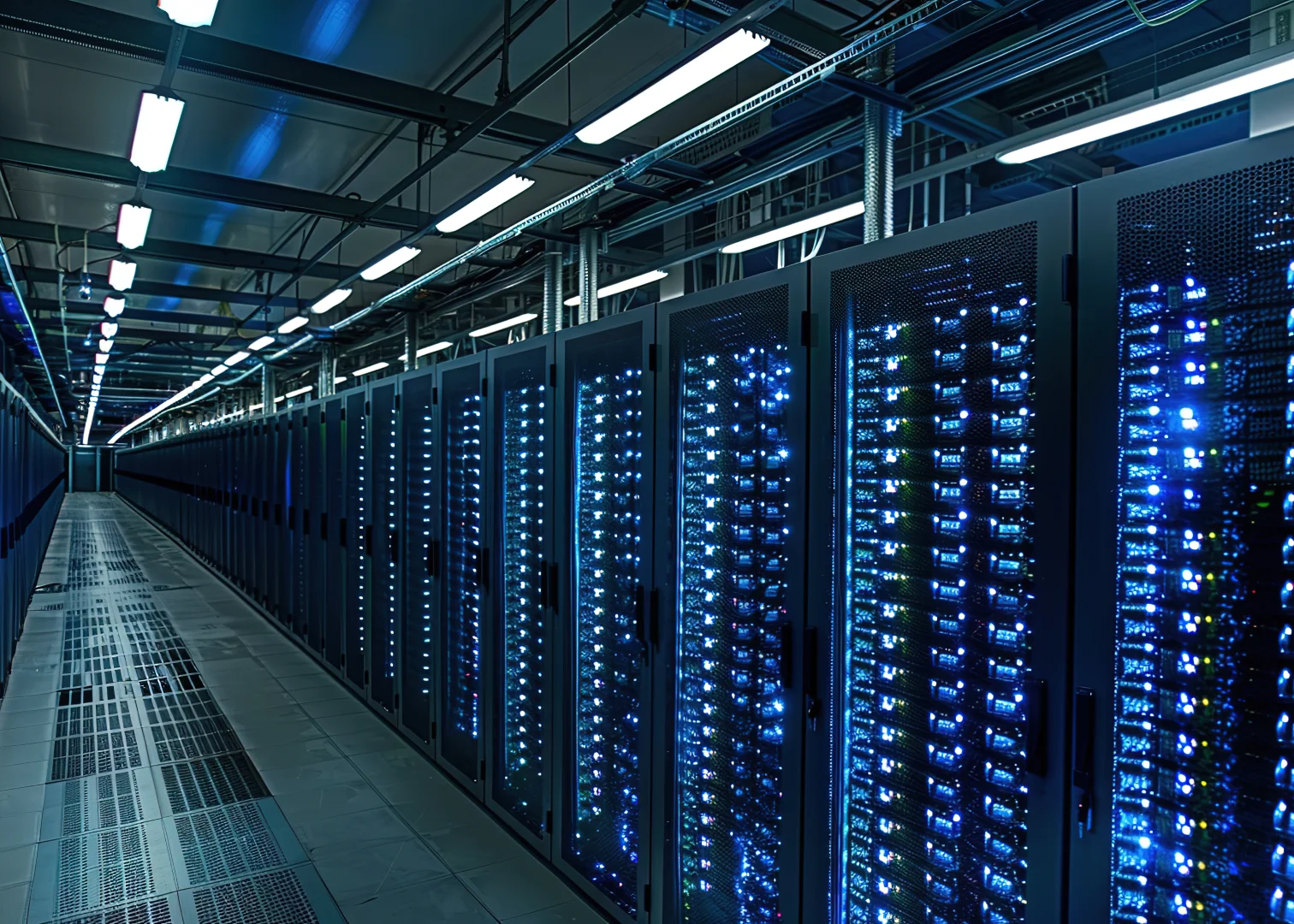
When President William Ruto visited Washington in May 2024, he came back with a headline-grabbing announcement: Microsoft and UAE-based AI firm G42 would invest $1 billion to build a massive geothermal-powered data center about 100 km northwest of Nairobi.
It was the kind of deal that gets framed as a turning point for Kenya as the next big frontier for cloud computing and AI in Africa.
That project is now stalled, and the reason is almost embarrassingly simple.
Kenya’s entire national electricity grid currently runs at about 3,000 megawatts of installed capacity. The proposed data center would have consumed roughly a third of that on its own.
Ruto himself admitted the math didn’t work, saying, “To switch on that one data center, we would need to shut off power for half the country. That’s when I knew there was a problem.”
So the flagship tech investment that was supposed to signal Kenya’s arrival as a serious digital infrastructure destination ran into a wall that had nothing to do with software, geopolitics, or financing. It was just electricity.
Kenya had leaned heavily on its geothermal energy story to attract this kind of investment. About 40% of the country’s energy mix comes from geothermal sources, which sounds impressive and is cleaner than most alternatives.
Still, “cleaner” and “enough” are two different things, and for a hyperscale data center, you need an enormous, stable, dedicated supply. Kenya doesn’t have that yet.
Behind the scenes, the process had already broken down before Ruto made his public comments. According to Business Insider Africa, Kenya’s Ministry of ICT prepared a concept note and sent it to the National Treasury for funding approval. It didn’t get cleared.
By August 2025, meetings between Kenyan and Microsoft officials had made clear the original May 2026 completion target was already gone.
Neither Microsoft nor G42 has commented publicly on the collapse of the timeline.
The original deal had a layer of geopolitical ambition underneath the business case. It was put together with input from both the US and UAE governments, partly as a counter to China’s growing digital presence in Africa through its Digital Silk Road program.
Chinese companies like Huawei and ZTE had already built significant relationships across the continent through state-backed loans and discounted hardware.
READ: National Security Concerns Threaten $1 Billion Microsoft – G42 Data Center Deal in Kenya
The Microsoft-G42 partnership was, in part, Washington’s answer to that: use private capital and American cloud infrastructure to establish a footprint before Beijing locked up the market.
That context makes the stall more embarrassing than a typical delayed infrastructure project. It was announced at a presidential summit, packaged as a symbol of US-Kenya ties, and held up as a model for how American companies could compete in the Global South.
The underlying problem, that Kenya’s grid simply couldn’t support it, was apparently not fully worked through before the announcement was made.
READ: Data Centers, Petrodollars and the Price of Building the AI Age
Ruto is now using the episode to push his government’s energy expansion target: 10,000MW of national capacity by 2030, backed by roughly $38 billion in planned investment through asset sales and private sector deals.
Whether that timeline is realistic is a separate question, but the data center fiasco has at least given him a concrete, easy-to-explain reason to accelerate the push.
Meanwhile, Kenya’s data center sector isn’t standing still. Airtel Africa’s subsidiary Nxtra is currently building a 44MW facility in Tatu City that is expected to be the largest in East Africa when it’s done.
That project, notably, is scaled to what Kenya’s infrastructure can actually support right now.
Microsoft hasn’t pulled back from Africa entirely. In April, the company announced a $329 million investment in South Africa focused on cloud and AI infrastructure, and more importantly, included upgrades to power and water readiness as part of the plan.
That detail looks pointed in retrospect. South Africa has more grid capacity and, apparently, a more complete feasibility assessment.
The Kenya situation is a clean illustration of a real problem across much of Africa: investor appetite for digital infrastructure is growing, but the foundational systems such as power, water, and connectivity haven’t kept pace.
Announcing a billion-dollar data center is easy. Plugging it in is harder.