




Kenya Digital Token (KDT) has drawn scrutiny over claims of concentrated wallet ownership, thin liquidity, and a marketing narrative built heavily around Kenya’s digital economy ambitions.
This is attached to a token running on Solana, a blockchain that has hosted some of crypto’s most damaging political rug pulls over the past two years.
KDT launched in July 2025 as a civic and community-focused project centered on national identity, youth empowerment, and financial inclusion. Its messaging closely echoed the government’s focus on digital transformation, although KDT was never a government-issued asset.
That positioning got a big boost early on. William Kabogo, Cabinet Secretary for ICT and the Digital Economy, posted about the project on X days later, describing it as an example of how such projects can support growth in the digital economy.
He also said it reflected growing confidence in tokenization as a way to exchange value and expand inclusion.
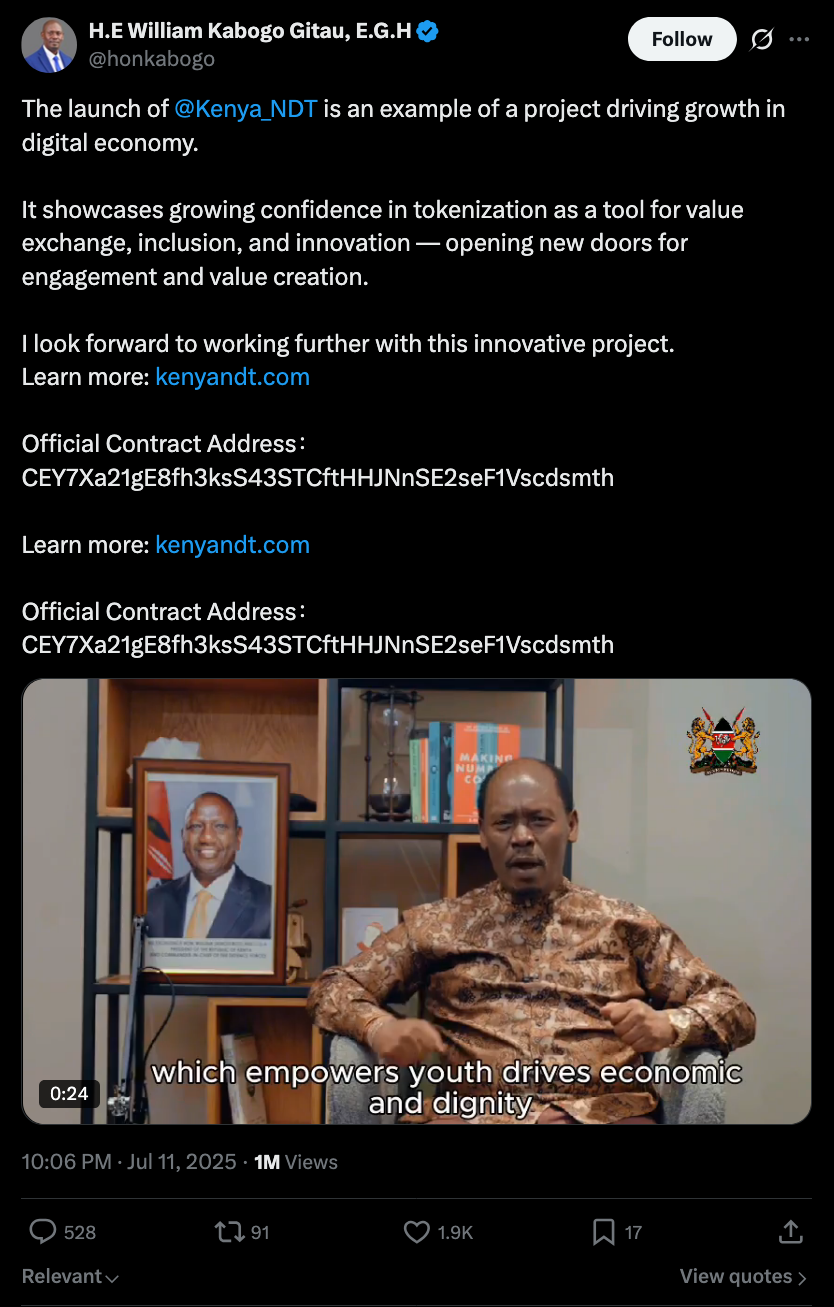
Nothing in that post made KDT a government initiative, but a Cabinet Secretary publicly promoting a token’s contract address, on his own verified account, gave it a level of visibility and implied credibility that a private white paper alone could never generate.
Since then, KDT has faced separate questions about who controls its supply and how much liquidity the token actually has. De.Fi’s contract scanner gives KDT a Safety Score of 47 out of 100 and an overall De.Fi Score of 46%.
It flags two high-risk issues: a lack of liquidity, as it could not find any trading pairs for the token, and dump risk, because a private wallet controls a significant share of the total supply.
It is worth considering what it means when a privately built token with this level of contract risk gains so much credibility from messaging linked to the state.
The Government Connection
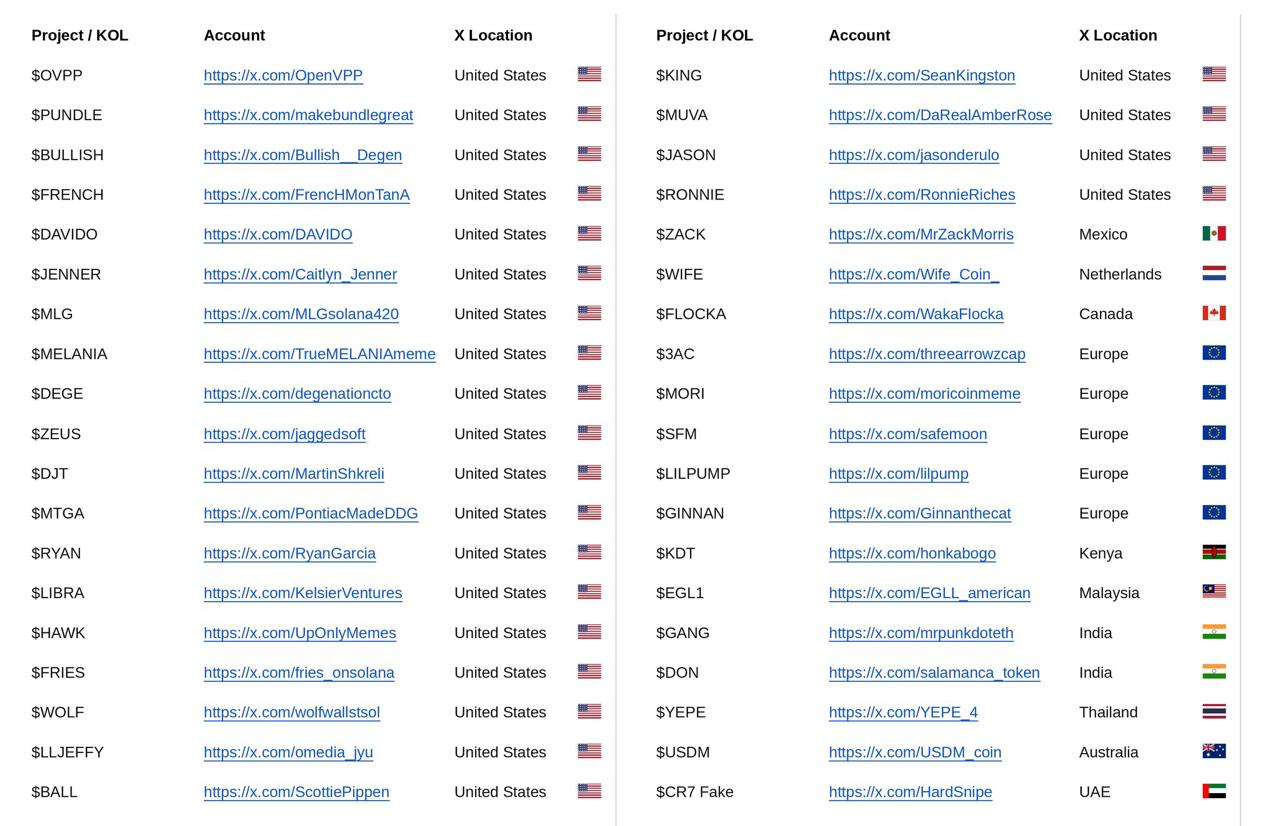
Kabogo appears as one of several prominent public figures tracked alongside cryptocurrency projects tied to their names or public accounts, in a pattern that spans well beyond Kenya.
A monitoring list shows similar entries connecting celebrities and public personalities to tokens carrying their name or likeness, from $JENNER to $MUVA to $DAVIDO, with $KDT listed against Kabogo’s X account under Kenya.
This kind of tracking has become common as token launches increasingly lean on a recognizable name to generate early attention and legitimacy.
Kabogo’s own words at launch reinforced the association:
“I welcome the launch of the Kenya Digital Token as a bold step by the private sector to expand the digital economy.”
A Familiar Pattern Elsewhere
The sequence of a high-profile endorsement followed later by questions over wallet concentration has already played out before on Solana.
In February 2025, Argentina’s president Javier Milei promoted a token called $LIBRA on X, describing it as a fund for small Argentine businesses.
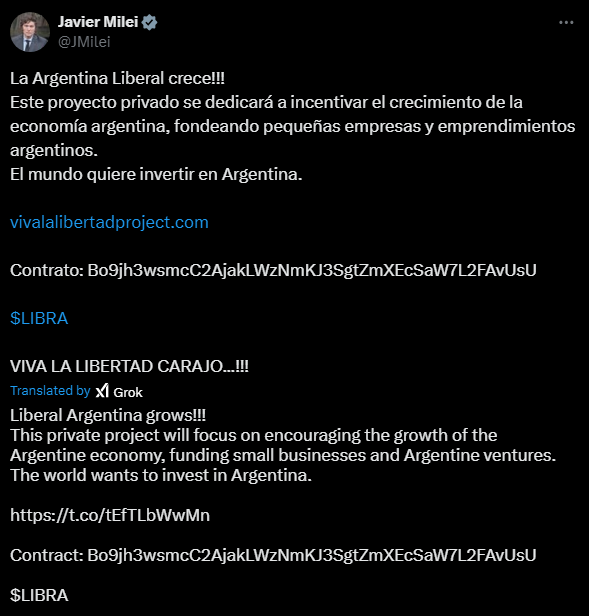
Its market cap peaked at $4.56 billion within hours before collapsing more than 94% over the following eleven hours, after developers reportedly withdrew roughly $100 million in liquidity.
Three out of four investors lost money, some losing up to $5 million, and Milei faced opposition calls for impeachment despite denying any ownership stake.
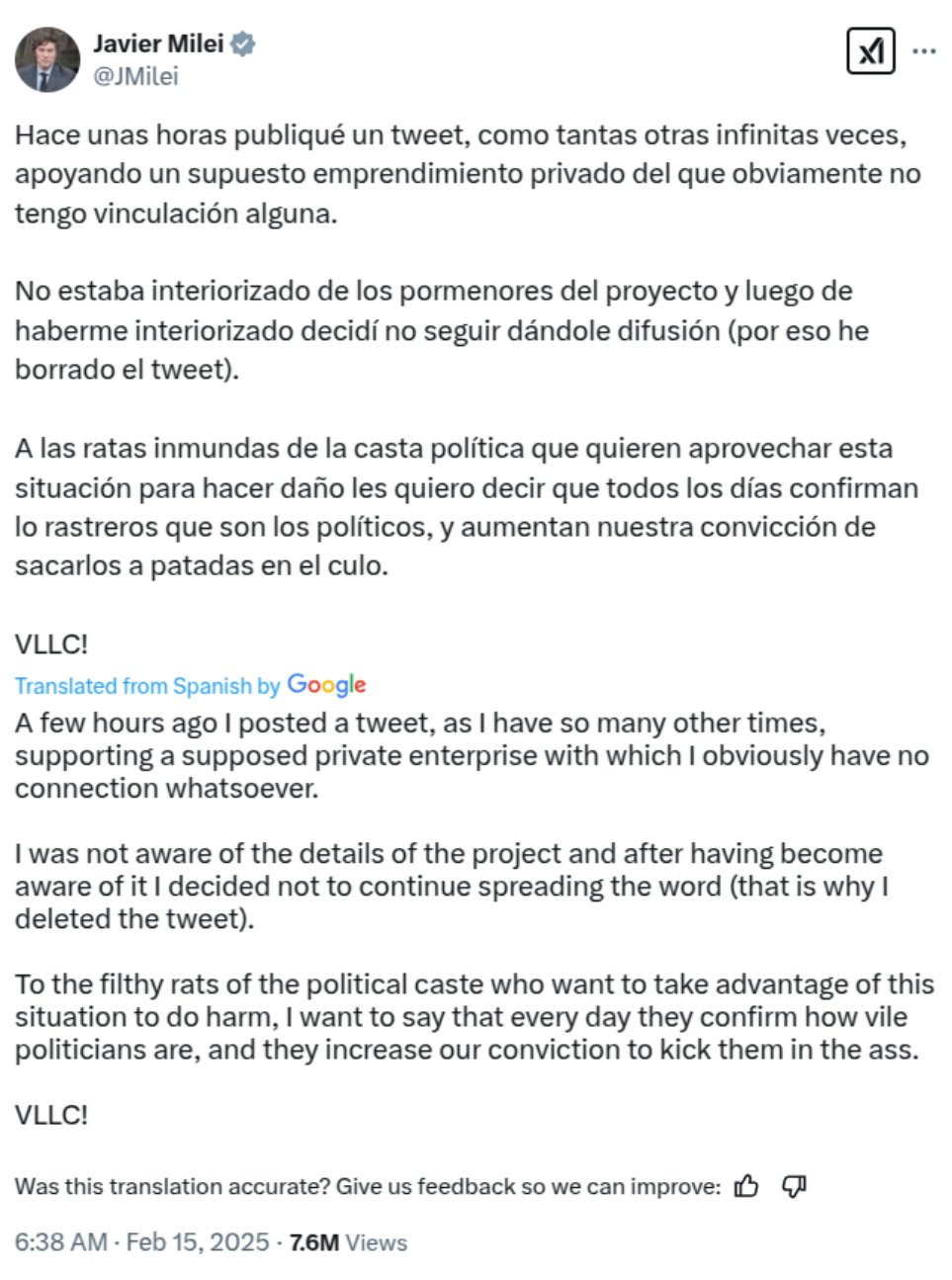
The comparison does not predict KDT’s outcome, but it shows that the pattern of endorsement followed by concentration risk is not new.
What the On-Chain Data Shows
Blockchain analytics firm Bubblemaps reported that roughly 150 connected wallets held 20% of KDT’s total supply shortly after launch, an amount valued at approximately $60 million and described in the project’s own materials as locked for the public.
Wallet clustering isn’t automatic proof of wrongdoing; treasury wallets, market makers, and early investors can all create similar patterns. However, it does place a lot of influence over price and liquidity in a small group of addresses.
Solflare’s current risk page flags KDT as unverified on Solana’s token registry and extremely illiquid. It also notes that a large share of its liquidity provider tokens are unlocked, meaning liquidity could be withdrawn without warning.
Solflare is a well-established software wallet in the Solana ecosystem.
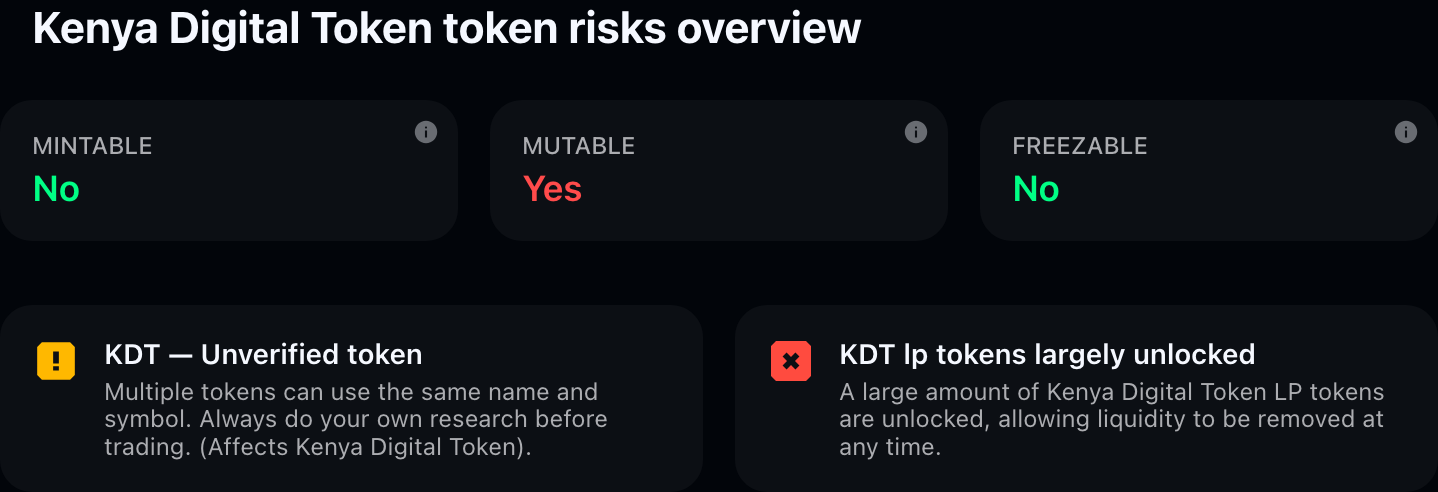
The same page indicates that 98.99% of the supply is controlled by the 20 largest wallets. Circulating-supply numbers aren’t consistent either.
Some trackers put the figure at around 220 million tokens, others closer to the full billion-token supply, which makes it hard to say with any confidence what KDT is actually worth.
Grounds for Caution
The Virtual Asset Service Providers Act took effect in November 2025, but the latest CBK/CMA notice confirms no virtual asset service provider has been licensed to operate in the country yet. That means no regulatory body has reviewed or signed off on KDT.
The available evidence doesn’t confirm KDT as a proven scam, and nothing shows William Kabogo owns or controls the wallets in question.
What it shows is a token using government-linked branding while also showing wallet concentration and liquidity conditions that suggest a possible rug pull. This combination calls for caution, regardless of how credible the endorsement behind the token may appear.