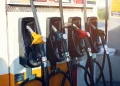





Kenyans today woke up to some unwelcome news. The Energy and Petroleum Regulatory Authority (EPRA) announced that Super Petrol would go up by KES 28.69 per liter and Diesel by KES 40.30, pushing their prices to KES 206.97 and KES 206.84, respectively. Somehow, Kerosene was spared from the fuel price hike.
The reason, according to EPRA, is a rapid rise in landed costs, which is the price at which Kenya imports fuel. Between February and March 2026, the landed cost of Super Petrol shot up by 41.53%, Diesel by 68.72%, and Kerosene by 105.15%.
The government tried to soften the blow by cutting VAT on fuel from 16% to 13% and injecting KES 6.2 billion from the Petroleum Development Levy Fund as a subsidy.
Energy CS Opiyo Wandayi credited President Ruto with both moves, saying that without the subsidy, prices would have climbed even higher. Still, the increases are sharp enough to set off a chain reaction across the economy.
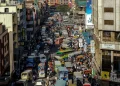
The most immediate hit is on public transport. The Matatu Owners Association announced a 25% fare increase earlier today, pointing to diesel costs as the main pressure point.
A vehicle that earns around KES 8,000 a day now burns through an extra KES 2,400 just on diesel, leaving operators with little choice. In simpler terms, a KES 80 trip from Nairobi CBD to Kawangware or Kibera goes up to around KES 100.
The KES 100 trip to Nyayo Estate becomes Ksh130. Rongai and Thika from CBD, previously KES 150, could now cost as much as KES 190. Long-distance routes are no different. Nairobi to Mombasa has already jumped from around KES 1,500 to KES 2,000.
| Fuel Type | Previous Price (KES/Liter) | Increase (KES/Liter) | New Price (KES/Liter) | % Change (Approx.) |
| Super Petrol | 178.18 / 178.28* | +28.69 | 206.87 – 206.97 | ~16.1% |
| Diesel | 166.54 | +40.30 | 206.84 | ~24.2% |
| Kerosene | 152.78 | 0.00 | 152.78 | 0% |
Transport costs don’t stay in transport. When it gets more expensive to move goods around the country, the cost of those goods goes up too. Everything from groceries to building materials gets repriced to account for higher delivery costs, and that burden lands squarely on consumers.
Fuel prices in Kenya are already one of the most taxed items in the country. Before a single liter reaches a pump, it has passed through nine separate levies, including excise duty, a road maintenance levy of KES 25 per liter, an anti-adulteration levy of KES 18 per liter, and an import declaration fee of 3.5% of the cost of the imported fuel, among others.
The government subsidy and the VAT reduction take some edge off, but taxes still make up a substantial chunk of what Kenyans pay at the pump.
Meanwhile, the opposition has turned the fuel hike into a political flashpoint. Former Deputy President Rigathi Gachagua, speaking for the United Opposition, has made serious allegations, claiming President Ruto personally profits KES 5 per litre from the government-to-government oil deal, which would amount to KES 2.5 billion from the current supply cycle alone.
READ: Kenya Fuel Stocks Provide 16-Day Buffer, But Treasury Fears Middle East Delays
The government has not responded to these claims directly. The opposition is demanding a special Parliament sitting, the scrapping of the G2G deal, and the removal of VAT on fuel entirely, warning of further action if nothing changes.
Whether or not the political claims gain traction, the arithmetic facing ordinary Kenyans is already settled. Higher pump prices mean higher fares, higher food prices, and higher costs on just about everything that needs to be moved from one place to another, which is most things.
For households already stretched thin, this fuel cycle offers very little relief.