






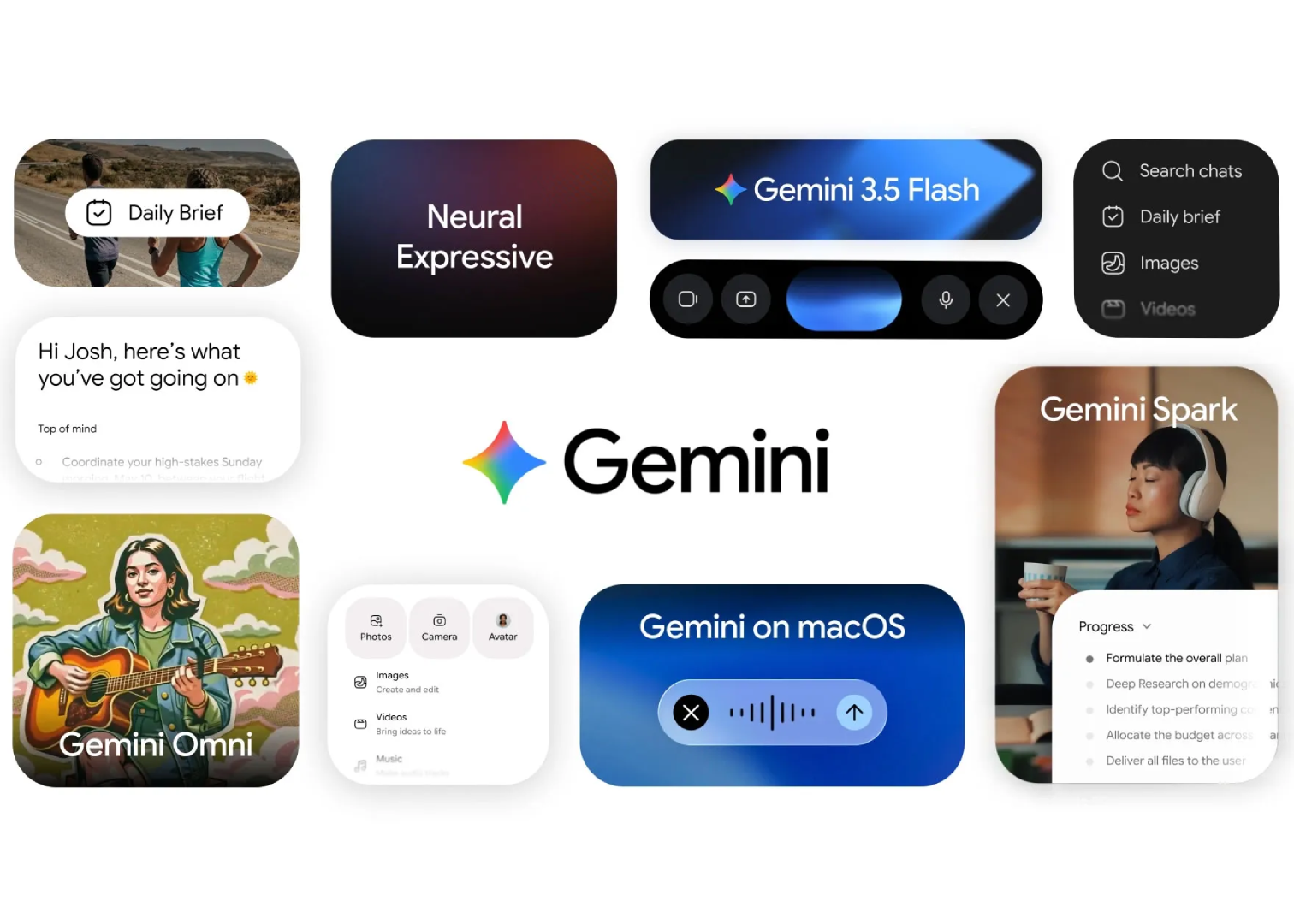
At Google I/O 2026, the company announced what it’s calling a shift into the “agentic era” of AI. That phrase gets thrown around a lot, but what Google showed in Mountain View last night has some numbers and actual products to back it up.
Here’s what happened.
The Numbers First
To understand the scale Google is operating at, start with tokens. Two years ago, Google’s models processed 9.7 trillion tokens a month. Last year that climbed to 480 trillion.
Today it’s over 3.2 quadrillion per month, roughly seven times larger than last year. More than 8.5 million developers build with Google models monthly, and the APIs are processing about 19 billion tokens per minute.
Google also now has 13 products with over a billion users each, 5 of which have crossed the 3 billion mark. The Gemini app has more than doubled its monthly active users in a year, now sitting at just under 900 million, while daily requests grew over seven times.
AI Mode in Search, which launched a year ago, has already crossed 1 billion monthly users. Google says queries in that mode have more than doubled every quarter since launch.
Gemini 3.5 Flash
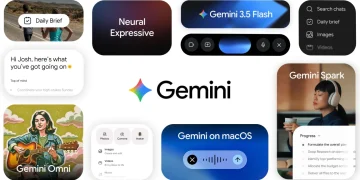
The headline model from the event is Gemini 3.5 Flash, which is now the default model powering Search’s AI Mode globally. Google says it outperforms the previous 3.1 Pro on key benchmarks and runs four times faster than comparable frontier models.
On cost, Google claims Flash delivers frontier-level performance at less than half the price of similar models. If large enterprises shifted 80% of their workloads to 3.5 Flash, Google estimates they’d collectively save over $1 billion a year.
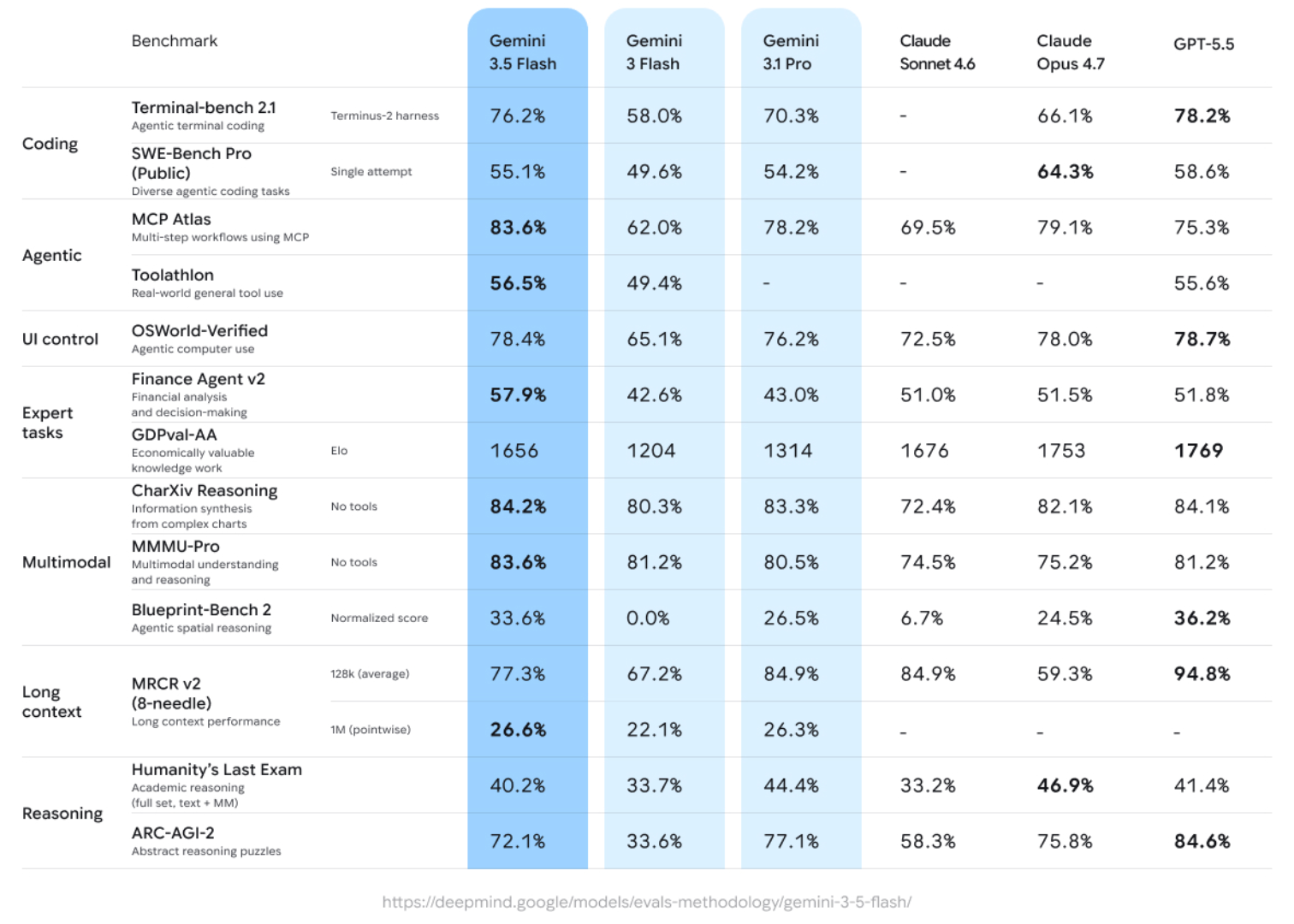
Internally, Flash paired with Google’s Antigravity platform is already processing more than 3 trillion tokens a day across the company’s developer tools.
Gemini 3.5 Pro is being used internally and arrives next month.
Antigravity 2.0
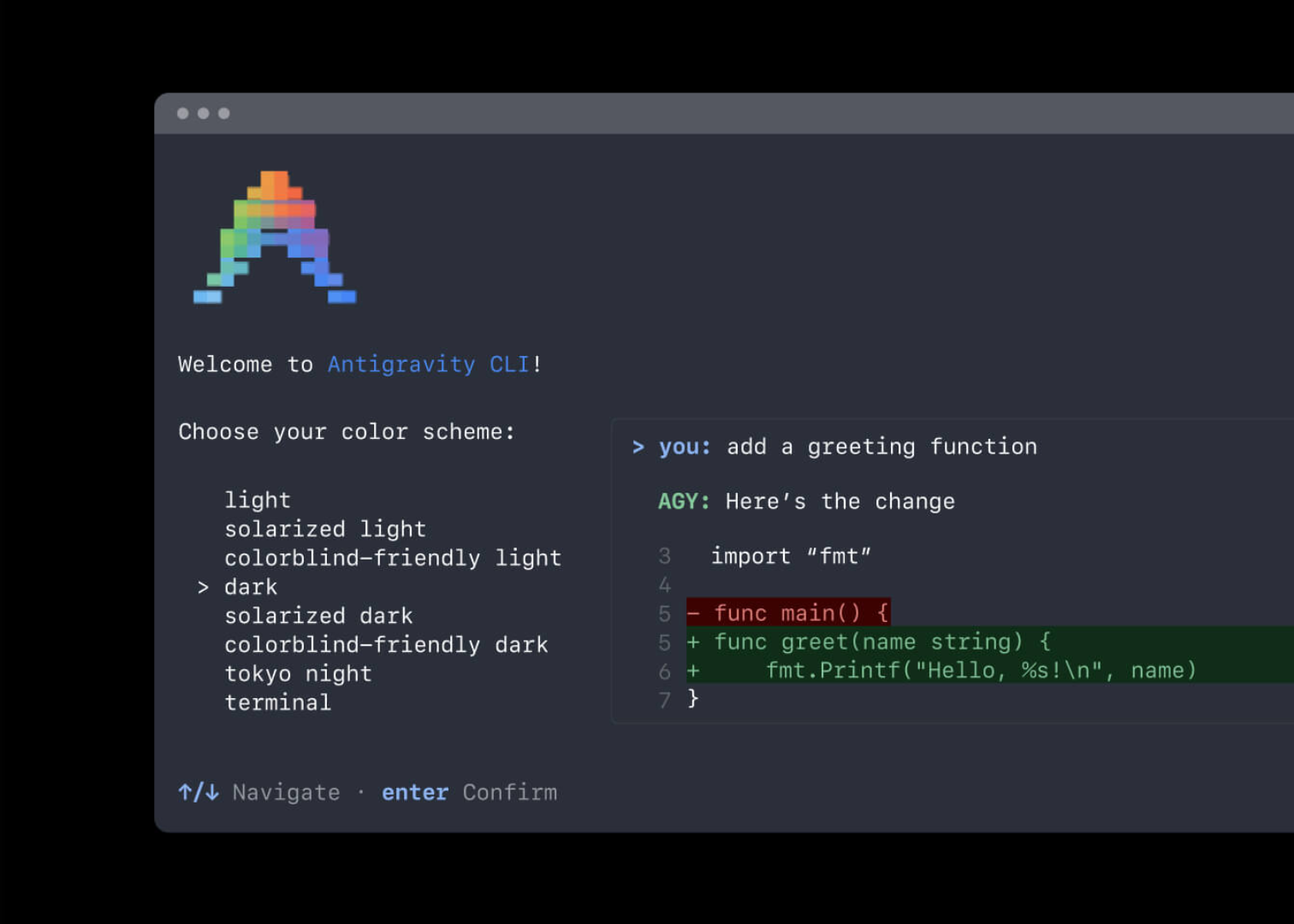
Antigravity is Google’s agent development platform. Version 2.0 ships as a standalone desktop app and is the central hub for managing cohorts of autonomous AI agents.
It runs a version of Flash optimized to work 12 times faster than other frontier models. It’s available to users immediately.
The Silicon Behind It All
Google’s infrastructure spending is incredible. The company spent $31 billion in capital expenditure in 2022. This year, it expects to spend approximately $190 billion, with a heavy focus on custom silicon.
This year’s release is the 8th generation of Google’s TPUs (Thermoplastic Polyurethane), split into two purpose-built chips:
- TPU 8t is built for large-scale pretraining. It delivers three times the raw computing power of its predecessor and can scale across more than 1 million TPUs globally through JAX and Pathways, forming what Google calls the largest training cluster in the world.
- TPU 8i is built for inference specifically, designed to cut latency in production environments.
Both deliver up to two times better performance per watt compared to the previous generation.
Search Gets Its Biggest Redesign in 25 Years
The Search box, largely unchanged for decades, has been completely rebuilt. The new version dynamically expands so users can type longer, more detailed questions. It replaces traditional autocomplete with AI-powered suggestions that help users phrase complex queries.
It also accepts text, images, files, videos, and Chrome tabs simultaneously. This is rolling out immediately in every country and language where AI Mode is available.
Following up on a search result is now frictionless too. Users can ask a follow-up directly from an AI Overview and immediately flow into a back-and-forth conversation, with context preserved throughout. This is live now on desktop and mobile worldwide.
Search Agents
Starting this summer for Google AI Pro and Ultra subscribers, users will be able to set up persistent AI agents inside Search.
These agents run in the background around the clock, monitoring the web, including blogs, news, social posts, and real-time Google data feeds (finance, shopping, sports) for specific things a user cares about.
The examples Google gave: an apartment hunter could describe exactly what they’re looking for and have an agent ping them the moment a matching listing appears. A sneaker enthusiast could set an agent to alert them the instant a favorite athlete drops a new collab.
READ: You Can Now Try On Clothes with AI Directly on Google Search
Search is also gaining agentic booking. Users can describe multi-condition requests (a private karaoke room for 6 people on a Friday night that serves food late, for example) and Search will pull live pricing and availability with direct booking links.
For categories like home repair, beauty, or pet care, users can ask Google to call businesses on their behalf.
Generative UI and Custom Dashboards
Through the combination of Antigravity and Gemini 3.5 Flash, Search can now build custom interfaces on the fly in response to queries.
For complex conceptual questions, it will generate real-time layouts assembling interactive visuals, tables, graphs, or simulations specific to what the user asked. This will be free for everyone in Search this summer.
For longer-running projects, Search can build custom persistent dashboards. Google’s example: a user building a new fitness routine could ask Search to generate a custom fitness tracker mini-app that draws on local reviews, live maps, and weather data to track progress week over week.
These Antigravity-built mini-apps will arrive in the coming months, initially for AI Pro and Ultra subscribers in the US.
Personal Intelligence Expands
Google’s Personal Intelligence feature, which lets users link apps like Gmail and Google Photos to Search for personalized results, is expanding to nearly 200 countries and territories across 98 languages, with no subscription required.
Google Calendar integration is coming soon.
The Other Announcements
- Ask YouTube reimagines video discovery by surfacing videos that match nuanced interests and jumping straight to the relevant segment.
- Docs Live lets users verbally dictate whatever’s on their mind and instantly generates a document. It goes beyond voice typing as users can create and edit files entirely by speaking. It rolls out to subscribers later this year, with voice features for Gmail and Keep coming after.
- Ask Maps already gave Maps its biggest upgrade in a decade, and Google is now extending similar conversational features across other products.
- Daily Brief is a personalized morning digest in the Gemini app that organizes your inbox, calendar, and tasks and suggests next actions.
- Google Flow is a collaborative workspace agent for brainstorming and project planning with “vibe coding” features for generating video effects and layered text.
- Google Pics is a canvas editing tool built on the Nano Banana model that isolates design elements as individual objects. It’s available to trusted testers now.
- Intelligent Eyewear includes Gemini-powered audio glasses launching this fall and display glasses for hands-free contextual tracking.
- Gemini for Science is an experimental architecture connecting Antigravity to over 30 life science databases and using Deep Think and Deep Research to accelerate research.
Google’s pitch here is a full-stack bet that includes custom silicon, faster models, cheaper APIs, and consumer products that do things autonomously on users’ behalf.
Only time will tell if the agent products work as described in practice, but the underlying infrastructure numbers and the sheer pace of rollouts suggest this isn’t vaporware. The next few months of real-world usage will reveal the real story.