







Kenya Revenue Authority (KRA) has spent the better part of the last two decades building one of the more sophisticated customs technology stacks on the continent, and the results at the port are clear for anyone to see.
Cargo that took two days to clear now can move in under 30 seconds. The Mombasa to Kampala transit corridor, once an 18-day ordeal of paperwork, convoy escorts, and border friction, now takes four days. Mombasa to Kigali has dropped from 21 days to five or six.
These are measurable changes in how East African trade moves, enabled by technology that was not there a decade ago. The more interesting question is not whether the system works but whether it is as secure, resilient, and future-proof as KRA’s presentations suggest.
What the Technology Does
The Integrated Customs Management System (iCMS) is the operational core of everything KRA does at the border.
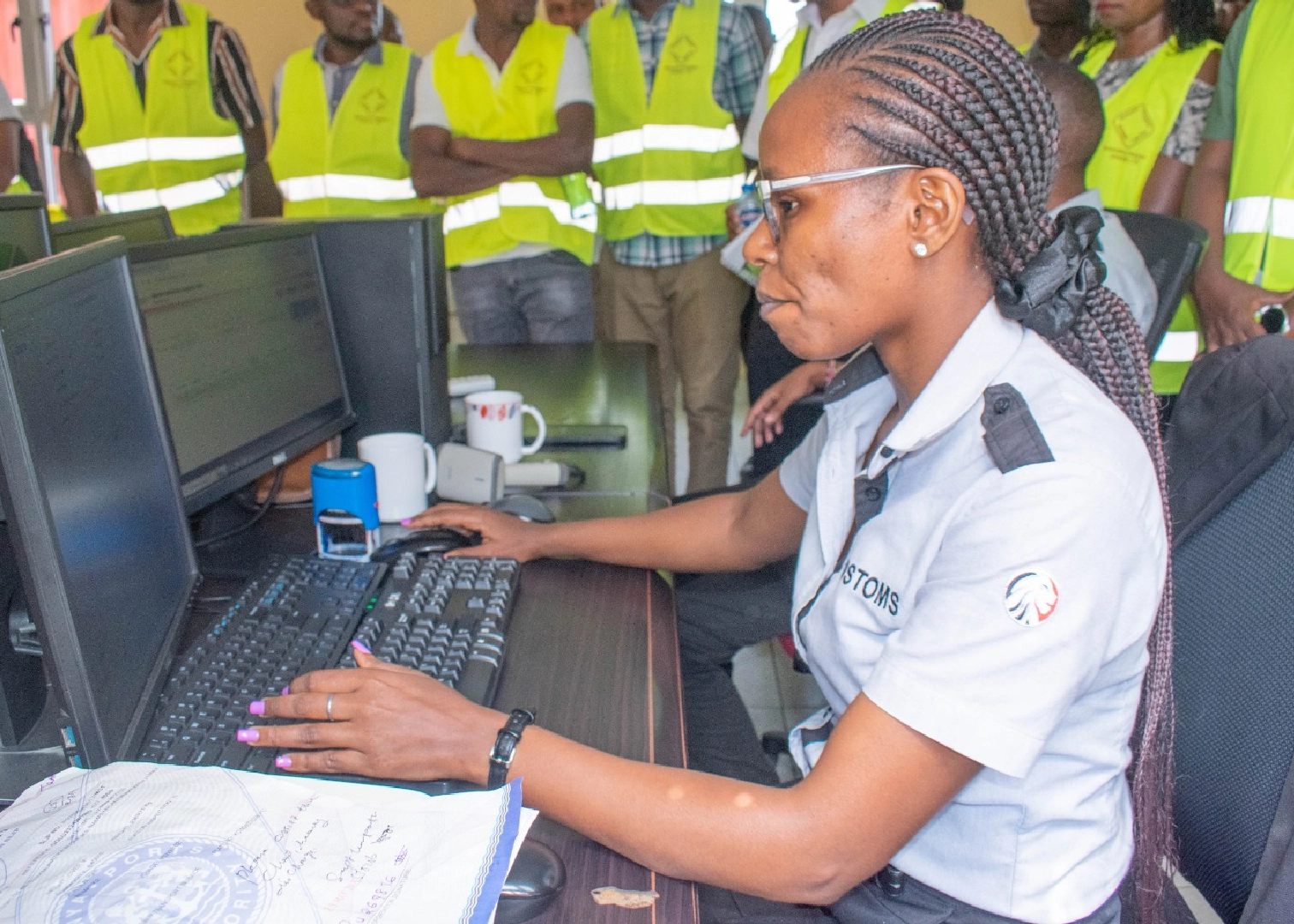
It handles declarations, risk profiling, duty assessment, cargo release, and post-clearance audit from a single platform, currently connected to 23 external systems, including KPA‘s KWATOS, NTSA‘s TIMS, and the National Treasury’s ePROMIS.
The integration extends to the Kenya TradeNet Single Window, which allows regulatory agencies like the Kenya Bureau of Standards and the Pharmacy and Poisons Board to process permits simultaneously rather than making importers chase approvals one office at a time.
Before iCMS, clearing agents had to submit paper documents and wait; now the system automatically accepts manifests, checks declarations against cargo data, calculates duties owed, and sends notifications directly to importers instead of going through agents who used to take advantage of information gaps to charge extra fees.
Layered on top of iCMS is RECTS, the Regional Electronic Cargo Tracking System that monitors transit cargo across Kenya, Uganda, Rwanda, and Congo along the Northern Corridor’s 12,707-kilometer network.
Every truck gets fitted with an electronic seal, passes through Smart Gates using automatic number plate recognition, and is tracked in real time from monitoring centers in Nairobi, Kampala, and Kigali.
Rapid Response Units sit along the route ready to intercept any vehicle that deviates from its geo-fenced path or triggers a tampered seal alert.
Before RECTS, nine separate private vendors ran competing tracking systems at costs of up to $1,200 per trip with no central oversight and documented cargo diversion.
The system is now free to transporters and covers excisable goods, Single Customs Territory cargo, and transit shipments simultaneously.
KRA operates 33 serviceable scanners across the country, from fixed and railway scanners at Kilindini to 3D CT baggage equipment at JKIA and land borders at Malaba, Busia, Namanga, Taveta, Lungalunga, and Isebania.
Scanned images feed into centralized command centers in Nairobi and Mombasa, where analysts run them against declared manifests through the iScan system, which sits directly inside iCMS.
60% of image analysis happens at the manifest level before cargo reaches a physical inspection point, catching discrepancies earlier rather than at the point of maximum port congestion.
Every declaration also passes through the iCMS risk engine, which routes shipments to green, yellow, or red channels based on compliance history, cargo type, country of origin, and fraud indicators, with entries auto-allocated to verification officers to remove the human discretion that historically created space for corruption.
The Revenue Numbers and the Infrastructural Vulnerability
Against this infrastructure backdrop, the financial performance of KRA’s customs operation holds up well.
In the financial year to June 2025, wet cargo collections came in at KES 330.7 billion against a target of KES 333.6 billion, a performance rate of approximately 99%. Dry cargo collected KES 297.3 billion against a target of KES 315.3 billion, landing at around 94%.
Taken together across both categories and all three years from 2022 to 2025, customs and border control exceeded its overall revenue target by more than 5%, a figure that places it among the stronger-performing departments within an authority that has struggled to hit consolidated national targets in recent years.
Where KRA’s customs story gets complicated is not in the revenue numbers, which by any reading show a department performing close to or above target, but in the resilience of the infrastructure itself.
Port stakeholders have flagged system downtimes affecting iCMS, iSCAN, and RECTS simultaneously as a persistent operational concern, and the consequences of a simultaneous failure across those three systems are not minor.
READ: Trade Nightmare as KRA Midnight Shutdown Could Leave Billions in Cargo Stranded
When the cargo tracking, scanning, and clearance platforms go down together, the port effectively reverts to manual processing, which is precisely the environment that the last two decades of investment were designed to eliminate.
The cybersecurity picture adds a structural dimension to that concern. Until recently, KRA operated on a single-supplier security model across its customs technology stack, a concentration of risk that left the entire architecture exposed through one point of failure.
The authority is now procuring multiple cybersecurity vendors to replace that arrangement, with incoming partners required to integrate into the existing BSMART infrastructure rather than replace it.
BSMART System Solutions provides the core technology behind RECTS across East Africa. This means a foreign company controls key parts of the region’s main cargo tracking system along a 12,707-kilometer trade corridor linking six countries.
The fact that discussions about adding more security layers are only happening now, years after the system was deployed at scale, raises fair questions for authorities that present the region’s digital infrastructure as well-planned and future-ready.
Infrastructure Is Not the Same as Compliance
The broader pattern visible in the KRA customs story is one that shows up across public sector technology in Kenya. The infrastructure investment is real, the operational improvements are measurable, and the comparison to where things were is legitimately impressive.
However, infrastructure solves the problem of process friction, not the problem of intent. Traders who want to misdeclare cargo, undervalue consignments, or divert transit goods do not stop because the system got faster; they adapt, and the sophistication of their adaptation tends to match the sophistication of the controls they are navigating.
KRA’s roadmap acknowledges this implicitly. The plan to add 72 scanners across the country, deploy AI for scanner image analysis inside iSCAN, and use drones for remote border surveillance represents a recognition that the current network still has gaps that determined bad actors can navigate.
The question is whether the revenue performance gap is being driven by those actors, by legitimate trade that is harder to capture than the targets assume, or by something in the system design itself that KRA has not yet diagnosed publicly.
For now, the KRA customs operation remains one of its strongest technology success stories, built over more than two decades and producing clear results across the trade corridor.
What remains to be seen is whether the authority can close the gap between what its systems can detect and what it is actually able to collect as the next phase of the roadmap unfolds.