





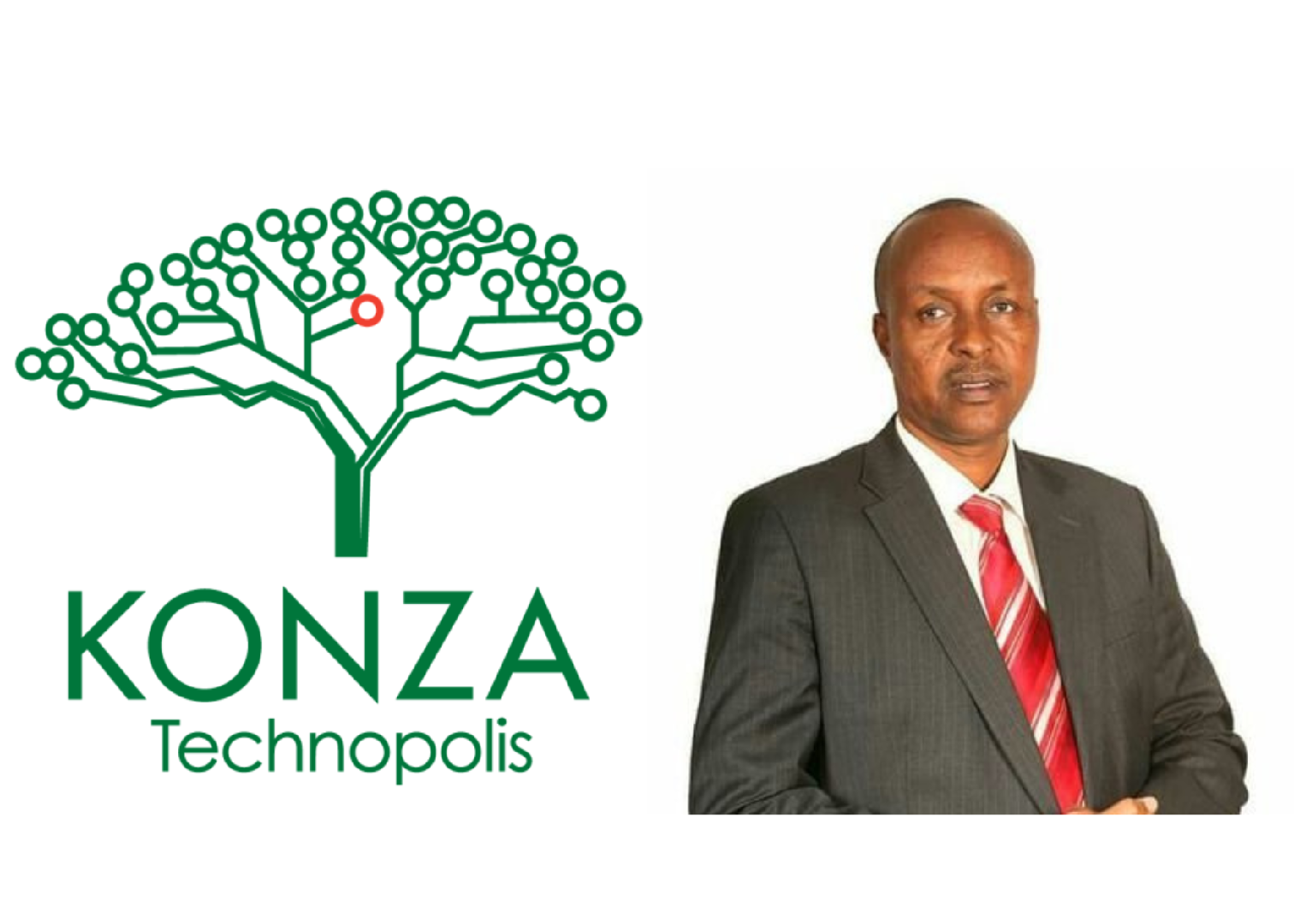
President William Ruto has appointed former Isiolo South MP Abdul Bahari Ali as the new Non-Executive Chairperson of the Konza Technopolis Development Authority (KoTDA) as gazetted on June 5, 2026. This comes as the project approaches a critical period that it has been facing for years.
The Konza National Data Center is operating at nearly full capacity, which is both proof of demand and a warning sign. A facility that cannot accommodate new workloads is not a sign of progress. It is a constraint.
The government’s planned PPP expansion requires a board chairperson who can move the project from planning to implementation and ensure it delivers the additional capacity that is needed.
The role itself is non-executive, meaning Bahari Ali sets strategic direction, ensures accountability, and bridges the gap between KoTDA and the government machinery that ultimately controls funding and policy.
READ: Konza City Explores Bonds and PPP Option to Fund Phase 2
His previous role as chair of the Tana and Athi Rivers Development Authority gave him experience working with state-backed infrastructure agencies, while his close ties to the ruling UDA mean he has direct access to key decision-makers whose support could be important for Konza.
That access matters because the challenges facing Konza are not administrative but competitive. Konza missed the first major hyperscale data center investment wave to Olkaria, where Microsoft and G42 are developing a renewable energy-powered data center campus with direct access to geothermal power.
However, the project has reportedly faced delays due to limits on available electricity demand.
Regardless, that is exactly what global cloud operators want, and it is something Konza, which is connected to the national grid and located 64 km from Nairobi, cannot currently offer on the same terms.
The technology ecosystem centred around Westlands, Upperhill, and Kilimani has not shifted south, and there is little indication that it will do so on its own.
READ: President Ruto Signs Technopolis Act Opening Door for New Tech Cities in Kenya
A chairperson can realistically focus on the easier wins. Government agencies are required to use the National Data Center, which can provide steady anchor tenants and lower risk for private investors.
The “trusted data zone” framework in the Kenya Cloud Policy 2025 is also still not fully put into practice as a strong investment incentive. Turning policy into a clear and usable investment case is the kind of role the chairperson is meant to play.
Obviously, the political context is hard to ignore when looking at the appointment. Naming a former Isiolo MP to a prominent national technology role, with the 2027 General Elections nearing, follows a pattern in how board positions are assigned in this administration.
The chairperson role is highly visible and can be seen as a reward, but it is non-executive, so it does not directly influence how the project is run.
If Bahari Ali uses government access and board authority to drive PPP expansion, secure anchor tenants for the data center, and speed up regulatory clarity for investors, the appointment can be justified on performance grounds.
If Konza Technopolis is still facing the same challenges at the end of his three-year term, the political interpretation will likely be seen as accurate.